AI Replaces Tasks, Not People: Busting the Myths Behind the Headlines
SHARE THIS ARTICLE
Most conversations about AI at work start with the same question: who gets replaced? It’s an understandable place to begin, and it makes for a dramatic headline. But it’s pulling a lot of Australian businesses away from a far more useful question: what does a team look like when people and AI each do what they do best?
This is what I see leading Australian businesses leaning into: hiring skilled professionals, including those offshore, working alongside AI coworkers inside workflows designed so that a person always owns the outcome. They’re hiring humans and AI coworkers at the same time, and they’re not treating it as a contest.
Here are six myths that are holding businesses back:
Myth 1: AI is here to replace your people
Let's start with the part of the fear that is true. Data entry, basic transcription, first-pass document processing, simple ticket responses and standard reconciliation are increasingly automatable by AI solutions. Any task that requires a repetitive, digital action will likely be given to technology, as it will always win when it comes to speed and price.
However, tasks are not roles, and the evidence on what happens to people when more tasks can be automated is more encouraging than the headlines suggest. PwC's 2026 Global AI Jobs Barometer, built on more than a billion job advertisements across 27 countries, found that jobs where AI amplifies expert judgement are growing twice as fast as jobs it merely simplifies, with 42% faster wage growth since 2021. The companies most exposed to AI are also raising wages and headcount faster than those least exposed.
Even the Philippine IT-BPM industry, which revised its 2028 targets downward in July 2026 citing AI, now describes its future as two million AI-enabled workers, with the emphasis on 'AI-enabled'.
This tells me work isn’t disappearing, it’s being redistributed away from routine tasks and towards judgement, oversight and improvement. It’s a story of different work, because AI changes what people do rather than whether they’re needed. It takes on repetitive tasks, and raises the value of the person who directs it, reviews it and owns the result.
Myth 2: You have to choose between automating a role and hiring for it
It’s a common consideration, when a role is vacant or a workload has outgrown the team, should you hire, or could software take over instead? What’s often missed is that the framing is flawed, because roles aren’t the unit that AI and software can automate, tasks are.
Run any role through a task audit and the same pattern appears. There’s generaally a large repetitive layer that automation handles well, a judgement layer that demands a person, and a messy middle of exceptions and communication that pure automation mangles and a pure hire spends expensive hours on. The AI-augmented role resolves that mixture. AI drafts and processes, the person reviews, decides and improves, and one seat covers what used to justify two.
In the language of Microsoft's 2026 Work Trend Index, most offshore roles start in Editor mode: the person sets the intent, AI creates the first draft, and the person edits and approves. As trust in a workflow builds, roles mature towards Director and Orchestrator, where one person supervises several automated workflows and handles what they escalate. Business leaders aren’t trying to figure out whether to automate or hire, they’re focused on mastering the mix of both.
Myth 3: If your team is using AI, you’ve already transformed
There’s a fundamental difference between acceleration and transformation. Acceleration speeds up a task, but transformation changes or removes the task entirely. The test is the question: after the change or AI implementation, does anyone still manually take this work from start to finish?
Many AI efforts stall because tools are easy and workflow redesign is hard. MIT's GenAI Divide research found that 95% of corporate generative AI pilots stall before scaled adoption, and every failure point is organisational.
In addition, Microsoft's 2026 Work Trend Index found that organisational factors explain roughly twice as much of AI's impact as individual skill, yet only 26% of AI users say their leadership is aligned on strategy. Training matters too: BCG found that 79% of people who received more than five hours of structured training became regular AI users, against 67% of those who received less.
Taken together, these numbers show that AI succeeds or fails on how a business organises itself, not on the technology itself. Most pilots stall, and the biggest influences on results are aligned leadership, redesigned workflows and proper training. In other words, businesses that invest in their people and processes, not just their tools, are the ones that see the benefit.
When AI cuts a four-hour task to forty minutes, hours logged stops meaning anything. Measure output, quality, cycle time and where the freed hours go, each against a baseline captured before the workflow changed.
It’s time to have a better conversation
AI isn’t magic, and it isn’t a threat to every job. It’s a set of tools that are very good at some tasks and unreliable at others, which is exactly why people matter. Replacement is the wrong conversation because it asks what AI can take away, the better conversation asks what becomes possible when tireless AI coworkers carry the production layer and skilled people own the judgement, the quality and the improvement.
The results won’t look the same for every business, and any provider who promises otherwise isn’t being straight. But the pattern is consistent: the businesses seeing results redesign their workflows, train their people properly and keep a named person accountable for every output. Almost every failure point is organisational, which is good news, because organisations can change.
If you want a place to start, pick one high-volume workflow you can map on a page, name the person who will review the output, capture a baseline and measure it for a quarter. Then do it again with the next one. That’s how any Australian business can begin building a team where AI and people work side by side.
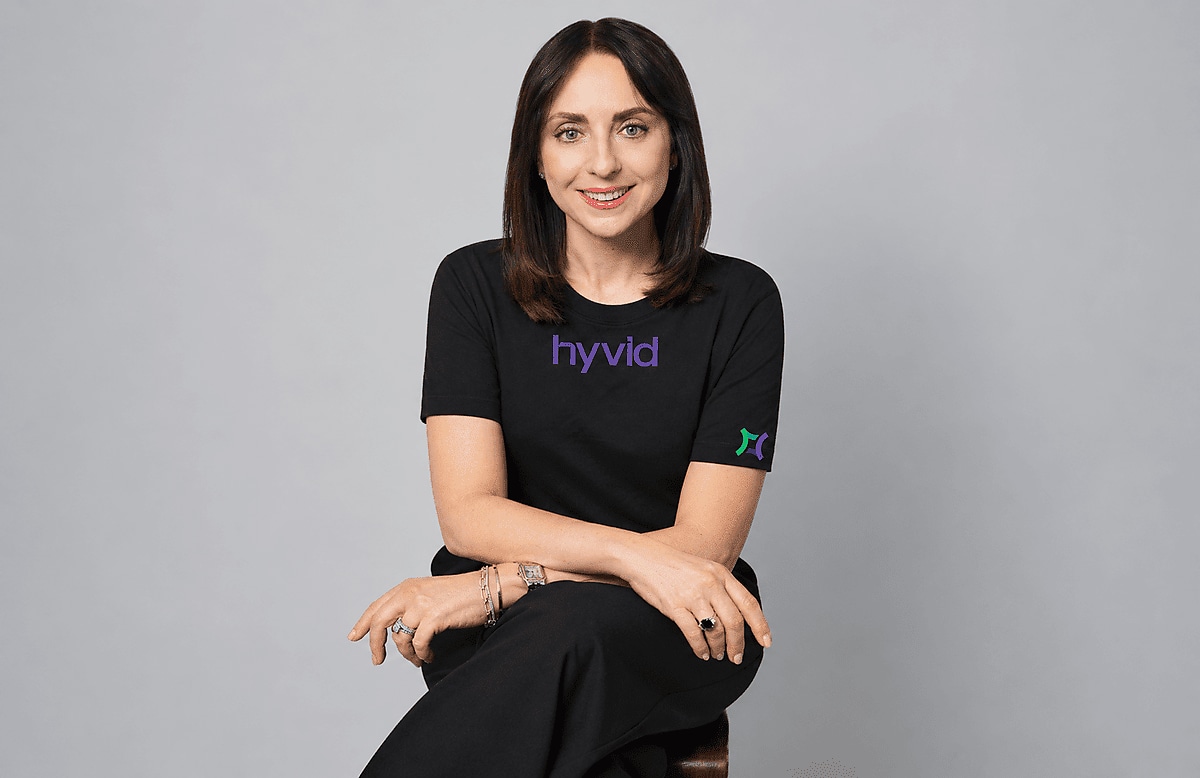
About Angela Vidler
Angela Vidler is Co-Founder and Managing Director of Hyvid, the AI-integrated global staffing company that pairs skilled professionals in the Philippines, India and Sri Lanka with purpose-built AI coworkers for Australian businesses. Hyvid's premise is simple: offshoring should make teams better, not just cheaper.
Previously as Managing Director of Diversify Offshore Staffing Solutions, Angela grew the business from 15 to over 1,500 people across three locations in the Philippines, keeping staff turnover under 4% and leading its $40m sale to a subsidiary of National Stock Exchange of India-listed Hinduja Global Solutions in 2022, at an industry-high 8× multiple.
Her career started at PwC and took in senior people and operations roles at King & Wood Mallesons and DibbsBarker, where she was COO, before she co-founded tech-forward law firm Hynes Legal. She holds a Bachelor of Commerce, a Master of Business (HRM), and is a GAICD graduate.
Angela speaks on AI and the future of work, founder wellbeing, and women leading in male-dominated industries.
About Hyvid
Hyvid was founded in 2026 in response to a clear and fundamental shift in the way work is evolving.
For more than 15 years, Hyvid’s founders have been building and scaling global teams. In 2010, Robert Hynes founded Diversify Offshore Staffing, later joined by Angela Vidler and Yjez Batulan. Together, they grew the business to over 1,500 professionals before its acquisition by NYSE-listed HGS in 2022.
Through that journey, one insight became undeniable: traditional offshoring was built around cost, but the future would be built around intelligence. Hyvid was created to reflect that shift — bringing together global talent and AI within a single, integrated workforce model.
Rather than layering AI onto legacy structures, Hyvid was designed from the ground up to enable people and intelligent systems to work together seamlessly. Today, Hyvid helps businesses build teams that are not only distributed — but designed for performance.
 Want to see more stories from trusted news sources?
Make HR Leader a preferred news source on Google.


