
Pay up Diva: Performer granted services contract variation for unfair payment terms
SHARE THIS ARTICLE
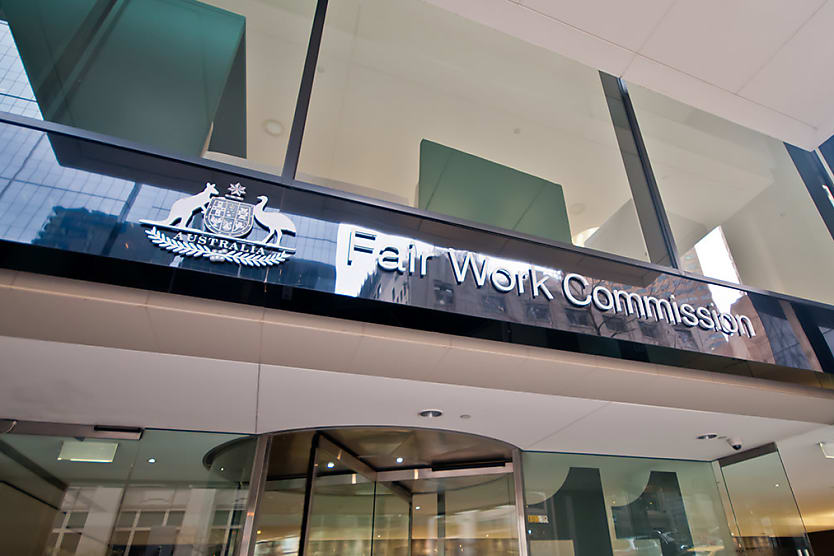
A contract term requiring an adult entertainer to forfeit payment for completed performances after she stopped work due to safety concerns has been remedied by the Fair Work Commission.
The Fair Work Commission found a payment forfeiture term unfair and ordered contract rectification to reflect fairer circumstances regarding performer expenditure and reimbursement.
The performer was employed by Diva Girl Pty Ltd, trading as Delicious Entertainment, on a contractual basis with set shifts across multiple venues in a two-week period.
As part of the agreement, workers made security deposits before each circuit, and were paid in arrears on completion.
The same system applied to travel reimbursement, with the incident in question occurring during a Central Queensland pub run that required approximately 1,829km or 19 hours and 39 minutes of travel.
According to the applicant, during the July 2025 pub run circuit, a male individual approached her motel room and knocked on the door whilst she was inside, causing significant fear for her safety. The employee reported the incident to the police and subsequently left the circuit mid-run.
Due to the emerging dispute over whether the employee should be paid for time already worked and receive travel and deposit reimbursements, the employee filed for an unfair contract term remedy consistent with section 536ND of the Fair Work Act on 30 July 2025, alleging that four clauses within the Central QLD Pub Run Circuit contract and agreement were unfair.
These terms dictated that “all wages, including commission, are forfeited if the contractor does not complete the full pub run circuit … all entertainers must stay at the provided accommodation for the entire duration, even if they leave the pub run … entertainers cannot leave the pub run without approval and that early departure results in full forfeiture of wages and commission … the agency [may] claim 20 per cent commission on all private shows even though the contractor bears all risk”.
Determining that the withholding of payment and reimbursement was part of the service contract, and that the applicant was indeed an independent contractor, deputy president Terri Butler was able to consider each of the purportedly “unfair” clauses.
Regarding the forfeiture terms, deputy president Butler noted that the applicant “did not claim that the provision requiring the performer pay a deposit was an unfair contract term or seek any order with the effect of relieving the performer of the obligation to do so”, thereby explaining that the next consideration was whether the forfeiture term is an unfair contract term.
In this way, the respondent’s “greater bargaining power” was considered in favour of finding unreasonableness in the term, as was the “more onerous obligations on the independent contractor than on the principal” and the fact that the term was not reasonably necessary to protect business interests.
Further, the applicant alleged the respondent exercised selective discretion due to the fact it "initially maintained a strict position requiring forfeiture yet subsequently offered to pay her ‘wages’ and return the deposit, albeit it still refused to pay travel allowance at that time”.
In this way, it was agreed that in the period since filing, the respondent paid the applicant for the July 2025 circuit, including deposit and travel reimbursement.
However, the aforementioned considerations saw deputy president Butler determine the forfeiture term as an unfair contract term.
Despite the respondent submitting that the commission should only determine whether “contractual provisions contravene applicable legislation”, rather than redraft any contractual wording, the deputy president applied the following contract variation to say: “(a) provide that the performer must be paid for any time worked, while making clear that this does not oblige Diva Girl Pty Ltd to pay for any time not worked during the remainder of an incomplete circuit; and (b) make clear that the deposit is reimbursable, and the travel assistance is payable, for any circuit that is commenced, whether or not it is completed”.
The application was therefore granted in part, with the variation to the services contract with regard to time worked on a circuit, deposit and travel reimbursement, and that accommodation remains unchanged for the first night away if the contract is not completed, and each subsequent night if the contractor had worked in the past 24 hours.
RELATED TERMS
A person who presents the necessary documents to a company seeking employment chances is known as an applicant. These documents may include a resume, CV, cover letter, expression of interest, or application form.
 Want to see more stories from trusted news sources?
Make HR Leader a preferred news source on Google.
