
Dispute over casual employment leads to landmark AI victory
SHARE THIS ARTICLE
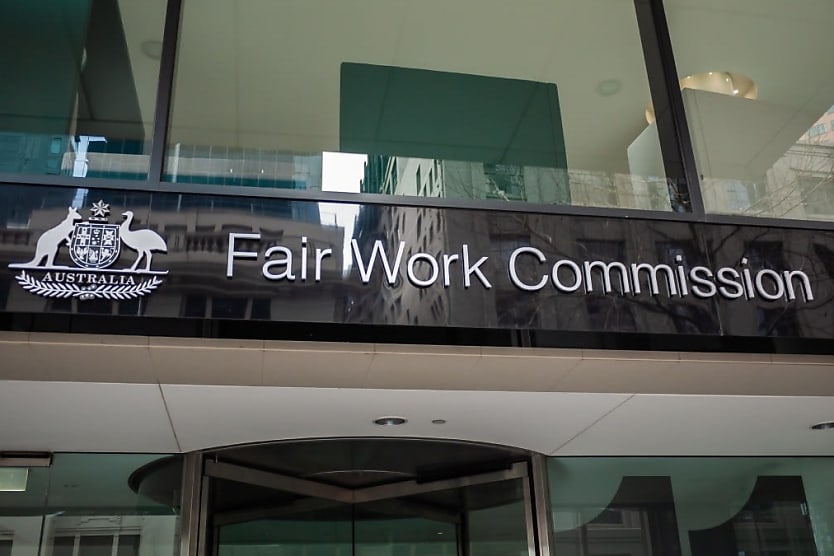
A recent win in the Fair Work Commission has been identified as the first to successfully harness AI in the legal system, raising questions around contemporary standards and the profession’s future.
Gregory Baker secured a double landmark legal victory as the first to achieve a judgment under the new casual conversion laws and to use artificial intelligence to help build his successful case.
The academic first notified Macquarie University that his circumstances no longer met the definition of casual employment under s.15A(1) to (4) of the Fair Work Act, which was not accepted by the institution.
The parties were not able to come to a resolution, necessitating the involvement of the Fair Work Commission. According to commissioner Stephen Crawford, a dispute around casual work conditions under the act had not been considered before.
Baker submitted that his employment relationship with the university was based on a commitment to continued and indefinite work lecturing in a computer studies subject, which would suggest Baker was not a casual employee.
Under the act, an employee is considered casual if there is an absence of a commitment to continued and indefinite work.
While Baker did not have a commitment in the form of a specific contract, but rather, a “reasonably standard casual contract” as noted by Crawford, Baker asserted that the commitment can be generated through “a mutual understanding or expectation … which can be inferred from the conduct of the parties”.
In determining this matter, Crawford said there is “a degree of inability for Macquarie University to elect not to offer work to Mr Baker and for Mr Baker to reject work”, considering the dependence of students on a lecturer. It was similarly suggested that it was likely the work would continue in the future.
Further, the fact that the university had full-time and part-time employees and that the employee worked a seemingly regular pattern also weighed in Baker’s favour.
The ability to revisit arrangements after each semester was noted, which, according to Crawford, “reduces the weight that should be afforded to this matter”.
In this way, the commissioner concluded that Baker’s employment with the university “is not characterised by an absence of a firm advance commitment to continuing and indefinite work”.
Crawford said: “I find that Mr Baker did not meet the definition of a casual employee in s.15A of the FW Act when he made the notification to Macquarie University.”
However, these findings were only part of the significance of Baker’s win. As reported by The Australian Financial Review (AFR), Baker was self-represented, did not hold substantial workplace law knowledge, and used artificial intelligence to prepare his case.
In fact, the case only came into fruition thanks to AI informing Baker that the new laws dictated his eligibility for a part-time position, with Baker noting he hoped the win would set a new precedent for the so-called “permanent casual system” within universities.
HR Leader spoke to Thomsons employment, health and safety partner Rachel Drew to examine what this decision means for the future of legal employment and the system.
For Drew, what stands out is the fact that AI did not replace legal skill, but was sophistically and deliberately deployed to “identify the issue, test arguments, check references and anticipate the other side’s case”.
“That is not automation of lawyering. It is augmentation of expertise,” she said.
In this way, she said the win “should not be read as proof that anyone with ChatGPT can now do a lawyer’s job. It should read as the opposite, that expert use of AI can produce excellent legal results, but only in expert hands”.
Further, Drew noted that the FWC continues to warn against AI-assisted applications due to repeated issues with incoherent submissions, fabricated authorities, and hallucinatory material. Not only do these challenges take time away from timely issues, but it also risks misinformation entering the system.
Baker told the AFR that many of these cases stem from free or less powerful artificial intelligence tools, and that he used a premium subscription for this case, which allowed him to upload all case material and verify all work.
Baker indicated this future could see “less work for lawyers, but more work for judges”.
Drew said: “AI is not a shortcut around professional skill.”
“It is a force multiplier for those who know how to interrogate it, verify it and constrain it. For young lawyers in particular, the message is urgent: those who build real AI fluency now will not be displaced by the technology, but will quickly outpace peers who treat it as a gimmick or ignore it altogether.”
“The profession should stop asking whether AI can replace lawyers and start ensuring lawyers become expert AI users, like Mr Baker.”
 Want to see more stories from trusted news sources?
Make HR Leader a preferred news source on Google.
