Is the tide turning on terminations?
SHARE THIS ARTICLE
Employers are being urged to identify what work remains critical to strategy and adjust workforce planning accordingly in a labour market where up to 30 per cent of employees replaced by AI may be rehired by 2029.
According to the latest Gartner research, poor workforce planning will force many organisations to rehire positions that were axed in a time of ambitious headcount reductions.
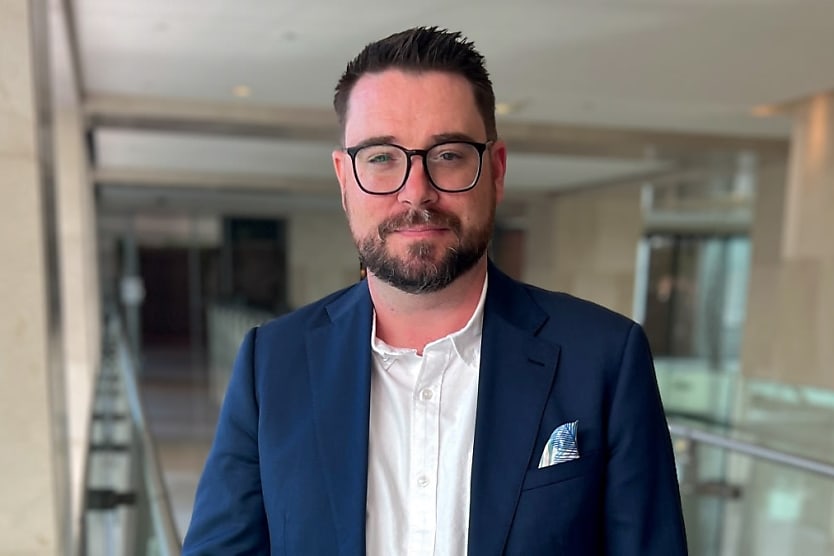
HR Leader spoke with Robin Boomer, senior director in Gartner’s HR Practice, to explore the role AI plays in workforce planning, the true cost of rehiring and where employers should shift their focus.
According to Boomer, the shift from replacement hiring to proactive, skills-focused recruitment is due as much to – if not, more to – macroeconomic factors, including the current state of the economy, with organisations looking to downsize, streamline and refine workforces while also keeping productivity demands realistic.
And while AI is a commonly cited excuse for workforce changes, Boomer said that only 1 per cent of reductions made by Australian organisations in 2025 were as a result of productivity gains through the application of artificial intelligence.
In this way, it would appear AI is not the headline driver of redundancies as has been suggested.
“I think the tide has been turning in terms of public sentiment and concerns about the actual realised benefits-to-cost ratio of AI … (AI providers) are creating fear, uncertainty and doubt that if you don’t jump on the AI train and do it now and do it as broadly as possible, you’re going to get left behind,” he said.
“But we’re also seeing that the costs of tokenisation and computing and maintenance, and also things like the skills of the workforce necessary to fully leverage and exploit those technologies are more costly … I’m talking to several leaders in organisations that have said, ‘We used AI in order to replace processes that were already working fine and being delivered by a human workforce, and then found that the costs kept rising to the point that it was actually less costly to deliver’.”
Accepting that it remains difficult to forecast the impact of AI on workforces, Boomer maintained that organisations often fail to analyse what kind of work is necessary and beneficial for the technology to do, and for humans to do.
Reflecting on the benefits it can bring to the medical industries in its reading of scans, Boomer said that “the task itself is not the value. The value is how does that then turn into something that is useful and helpful to our customers, constituents or other stakeholders?”
“Even though AI in the context of radiology makes it less costly and available to provide those services … that means there’s more demand for those services. And AI can’t do things like create a care plan for a patient or help them understand what the implications are and what they need to do.”
In this way, Boomer said HR is starting at too base a level in its workforce planning efforts, often remaining stuck in the past whereby planning was simply done at the workforce level by looking at the roles and skills needed to get tasks done.
Now, where AI can potentially change enterprise-level strategy or the mission of the organisation, HR are needing to go all the way back up the chain to enterprise-level horizons to analyse what the business capabilities, not just workforce capabilities, are.
He explained that it is then necessary to determine which capabilities are more requisite and where the value streams flow through.
As such, proactive risk mitigation and strategisation will become more valuable in 2027 and beyond, as will opportunity seizing.
Boomer said: “It’s not just about where do we need to manage the costs and efficiency, but also where do we want to invest to compete with our competitors? What are the things that are going to enable us to deliver more value than the alternative options, such that customers or our citizens want to use our services or our products?”
“That’s why we say we have to go back to the enterprise strategy, the business capabilities … what is the employer value proposition that we offer that would make us more attractive to the workforce capabilities that we need in order to deliver?”
Reflecting on the financial and time cost of rehiring, Boomer reinforced the importance of proactive workforce planning that maps out the work AI and humans do, as well as the business’s processes, data, and technology readiness before letting go of the workforce.
“We’ve also got to model that total workforce cost and total cost of ownership of AI in a bit of a balanced ratio and make sure that we are working with the C-suite, especially operating officers, finance officers, the CEO, for them to understand what are the total workforce costs and what are the total AI costs,” he said.
“And all that needs to have the situational awareness and scenario planning built in such that we can make the right decisions at the right time, and not before.”
RELATED TERMS
The practice of actively seeking, locating, and employing people for a certain position or career in a corporation is known as recruitment.
When a company can no longer support a certain job within the organisation, it redundancies that employee.
The term "workforce" or "labour force" refers to the group of people who are either employed or unemployed.
Assessing the business's present and future demands to ensure there is an adequate supply of competent workers and leadership talent is the definition of workforce planning.
 Want to see more stories from trusted news sources?
Make HR Leader a preferred news source on Google.