
Remuneration and reactivation for driver after Uber failed to handle misconduct complaints
SHARE THIS ARTICLE
A rideshare driver has seen his unfair deactivation remedied despite over 15 safety and conduct complaints made against him while working for Uber.
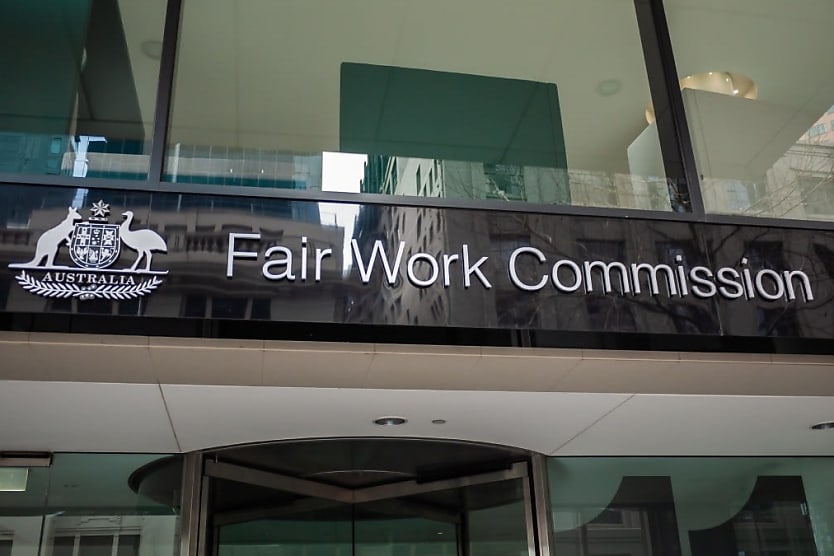
The employee-like worker has been allowed to continue working after the Fair Work Commission found Uber did not deactivate the driver in a way consistent with the Digital Labour Platform Deactivation Code, therefore constituting an unfair deactivation.
Commencing as an Uber Eats driver in early 2020, the worker signed a services agreement with Rasier Pacific, the contracting entity for Uber, before beginning work as a passenger driver in October 2022.
Uber first received a complaint against the driver on 19 December 2022, when a passenger reported being asked inappropriate questions. At this time, Uber sent a message to the driver, clarifying that drivers are required to adhere to community guidelines or risk being permanently removed.
The driver denied the accusation, and Uber concluded the matter at this time.
Fifteen more complaints were made by passengers between 27 February 2023 and 23 May 2025, with accusations including that of phone use while driving – and on one case, making physical contact with a stopped car – dangerous driving – including tailgating, and an incident of speeding up to 130km – unprofessional communication with passengers and verbal abuse with potential swearing, sexually suggestive comments, touting rides outside of the rideshare app, misogynistic language, touching without consent, a demand for cash payment, and turning off the meter.
Each occasion, Uber sent an initial communication detailing the accusation. Several times, however, after the driver either neglected to respond or denied the accusation, it was not taken further. After the fifth complaint, Uber sent a message, including: “We acknowledge that there are two sides to every story.”
The first and fifth complaints were listed as some of the reasons for the preliminary deactivation notice issued on 3 June 2025.
After the seventh complaint, which concerned the potential provision of rides outside of the Uber driver app, Uber’s message included: “Keep in mind we’re unlikely to remove access for your account based on a single incident … at this stage, you still have access to Uber.”
Communication regarding the eighth complaint, an accusation of unsafe driving, did suggest a community operations team member would be in touch with the driver; however, after the driver called the accusation false, there was no further correspondence recorded on this matter.
A ninth complaint from 7 January 2024 detailed verbal abuse. While Uber did not provide a record of the driver’s response, the employee included a message from Uber on this date, which allegedly said: “We thank you for letting us know about your side of the story as it gives us a clear picture of what really happened. I can assure you that no restriction has been placed and your account is currently active.”
Uber also referenced this incident as a reason for the preliminary deactivation notice.
Further, after denying making contact with another car due to distracted driving, Uber allegedly responded: “We appreciate you for taking the time to share your perspective on this matter and that you believe this to be a false report. Therefore, we will consider this when deciding on the next steps to take internally.”
There is no further record regarding this matter.
A similar response was allegedly sent from Uber after the driver called a complaint of verbal abuse false. However, this complaint was also listed as a response to the preliminary deactivation notice.
Uber deactivated the driver’s app access after a complaint made on 7 April 2024 regarding inappropriate physical contact. However, access was reactivated on 11 April 2024 without any records of further internal investigation.
A 12th complaint was also allegedly resolved despite a complaint of verbal abuse and shouting.
Another two complaints also failed to affect the driver’s app access, but did spark a warning that serious or repeated claims may affect access.
It was after the 16th complaint, on 23 May 2025 and regarding racism, unprofessionalism, and leaving a passenger on the side of the road, that Uber took matters further, issuing the aforementioned preliminary deactivation notice.
Within the notice, Uber said: “You’re receiving this message because a review of your account found that you have previously been reported for multiple instances of discrimination, which is a direct violation of your agreement with Uber and we are considering terminating your access to the Uber Driver App.”
The driver was offered the opportunity to respond and seek support or representation.
Between 3 June and 14 June 2025, the driver uploaded screenshots, messages and emails of his communication with Uber, including a transcript of a telephone conversation with a representative.
However, it was disputed whether a letter supplied by the driver was actually provided to Uber.
Uber issued a final deactivation notice on 17 June.
The driver applied for an unfair deactivation remedy under section 536LU of the Fair Work Act, which operates as the independent contractor version of an unfair dismissal claim, considering employee-like gig workers and some transport contractors.
On whether Uber complied with Code: s536LJ(3) regarding the operation of a digital labour platform, Fair Work commissioner Oanh Tran found the deactivation not consistent, as the warnings given did not contain the “mandatory content in s 8(2) and it failed to give a warning in relation to the reason relating to the complaint dated 23 May 2025, as required by 8(1)”, the warning, preliminary and final deactivation notice did not provide sufficient information as dictated by ss 8(3), 11(2) and 14(6), and the service did not make further inquiries that was reasonably warranted as required under s 13(8).
In consideration of whether there was a valid reason for dismissal, Tran said the driver’s denials and the records provided by Uber were not enough to prove the conduct formed the basis of the complaints occurred, nor does, as Uber argued, any consistency or frequency exist to prove misconduct occurred.
Tran said: “I consider that it is relevant and unfair that Uber informed [the driver] that some complaints were resolved by then nevertheless relied upon them to deactivate him.”
“For all the above reasons, I am satisfied that Uber’s deactivation of [the driver] was unfair.”
 Want to see more stories from trusted news sources?
Make HR Leader a preferred news source on Google.
