
How does AI best work at work?
SHARE THIS ARTICLE
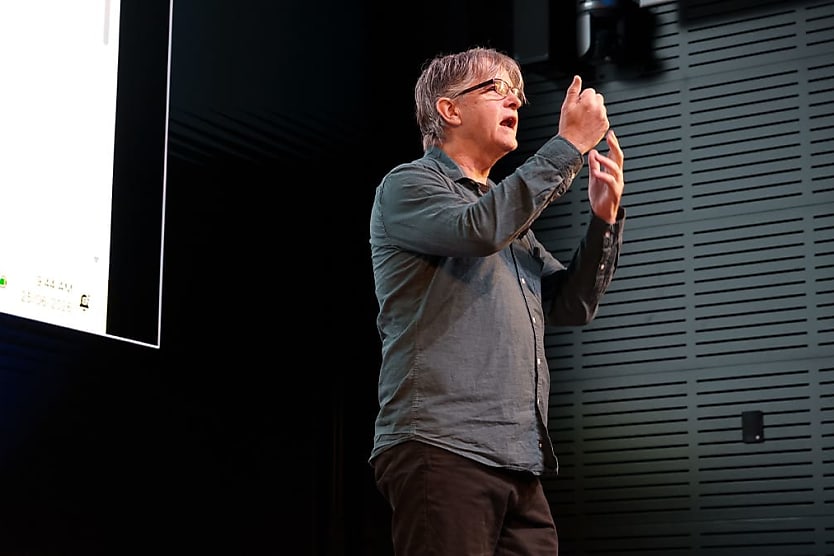
Leveraging existing workplace AI capabilities and harnessing employee potential is crucial to the role of the modern HR professional, according to one Deloitte executive.
Speaking at the inaugural HR Leader Innovation Summit on 26 June, the chief edge officer at Deloitte Australia, Pete Williams, noted the importance of strategy when it comes to professional AI use and the management of people in the digital age.
Opening his address, Williams asserted that AI is not a search engine, but a tool that needs human-applied context, judgement, and validation to best function at work.
An important distinction exists, he said, for platforms such as Copilot that are not “reasoning engine[s]”.
Williams explained that these AI searches can be broken down into their keywords, rather than the context of the entire phrase, meaning results can oppose the original intention of the search.
“It basically converts your prompt into a search, fragments that search, retrieves, and then comes back and compiles. It is not like having a conversation with ChatGPT or Claude,” he said.
Williams asserted that a good Copilot user doesn’t write prompts themselves, but asks the platform to come up with the prompts that will provide the most accurate and helpful response. Similarly, he urged users to request sources, adding: “That little slash button … will be your best friend.”
In this vein, he noted: “Context absolutely matters.”
“The two biggest risks are laziness and ignorance. If you don’t know how this stuff works, if you don’t know how to use it, guess what? Things are going to be difficult. Because it’s predictive, not deterministic.”
“Always be validating. Sometimes, what looks really good will be very wrong.”
The real power in AI, Williams said, is its ability to provide an answer in context through reverse engineering. He urged users to have AI ask questions itself, until you arrive at the desired product.
Williams also discussed how the current state of AI has put HR in a difficult position, whereby they are almost expected to lead the AI charge and answer to the CFO on adoption while being “buried in operational paperwork”. This has presented a new challenge to HR, who are now being asked to teach AI adoption despite not being an IT-focused profession.
He asked: “Who do you learn from?”
Williams urged HR to identify, encourage, and support those within their company who are experimenting with AI.
Reflecting on the trailblazers within Deloitte, Williams said many at the frontier of AI use are self-developing.
But many, he said, “are the lost souls in a 10,000 people organisation”. They are an untapped group, Williams asserted, who are “doing the best stuff .. who nobody sees”.
“If you’re big enough to have an HR department, you’re big enough to have people like that,” he said.
HR must look to the trailblazers, he noted, rather than feeling the responsibility of knowing everything or training employees.
Williams said: “Software’s permeating, people are learning, and you’re being told, you’ve got to drive the change. Drive it with these unsung heroes.”
“Give them the license to be themselves.”
Concluding his address, Williams surmised that HR must read their people, identify the “top-guns”, set the rules, and make sure guidance and guardrails are in place.
“Take your seat at the table. Judgment is the product,” he said.
RELATED TERMS
An employee is a person who has signed a contract with a company to provide services in exchange for pay or benefits. Employees vary from other employees like contractors in that their employer has the legal authority to set their working conditions, hours, and working practises.
 Want to see more stories from trusted news sources?
Make HR Leader a preferred news source on Google.


