
Three ways HR leaders can create a more human employee experience
SHARE THIS ARTICLE

What does it take to build a workplace where people feel connected, supported and able to perform at their best? The first three episodes of Reward Gateway | Edenred’s podcast, The HR Issue, bring together leading voices in employer branding, people strategy and engagement to explore where HR leaders can make a meaningful difference.
Creating a great employee experience is not about finding one initiative that solves every workplace challenge. It is shaped through the everyday moments that influence how people feel about their work, their leaders and the organisation around them.
For HR leaders, this presents a valuable opportunity. By strengthening human connection, better preparing managers and listening more closely to employees, organisations can create workplaces where both people and performance thrive.
These opportunities sit at the heart of The HR Issue, a podcast from Reward Gateway | Edenred exploring the issues shaping HR and the employee experience today.
Across its first three episodes, hosts Kylie Terrell and Kameel Martin speak with influential voices in employer branding, people strategy, leadership and engagement. Here are three of the most important themes to emerge from their conversations.
Make human connection the foundation of the employee experience
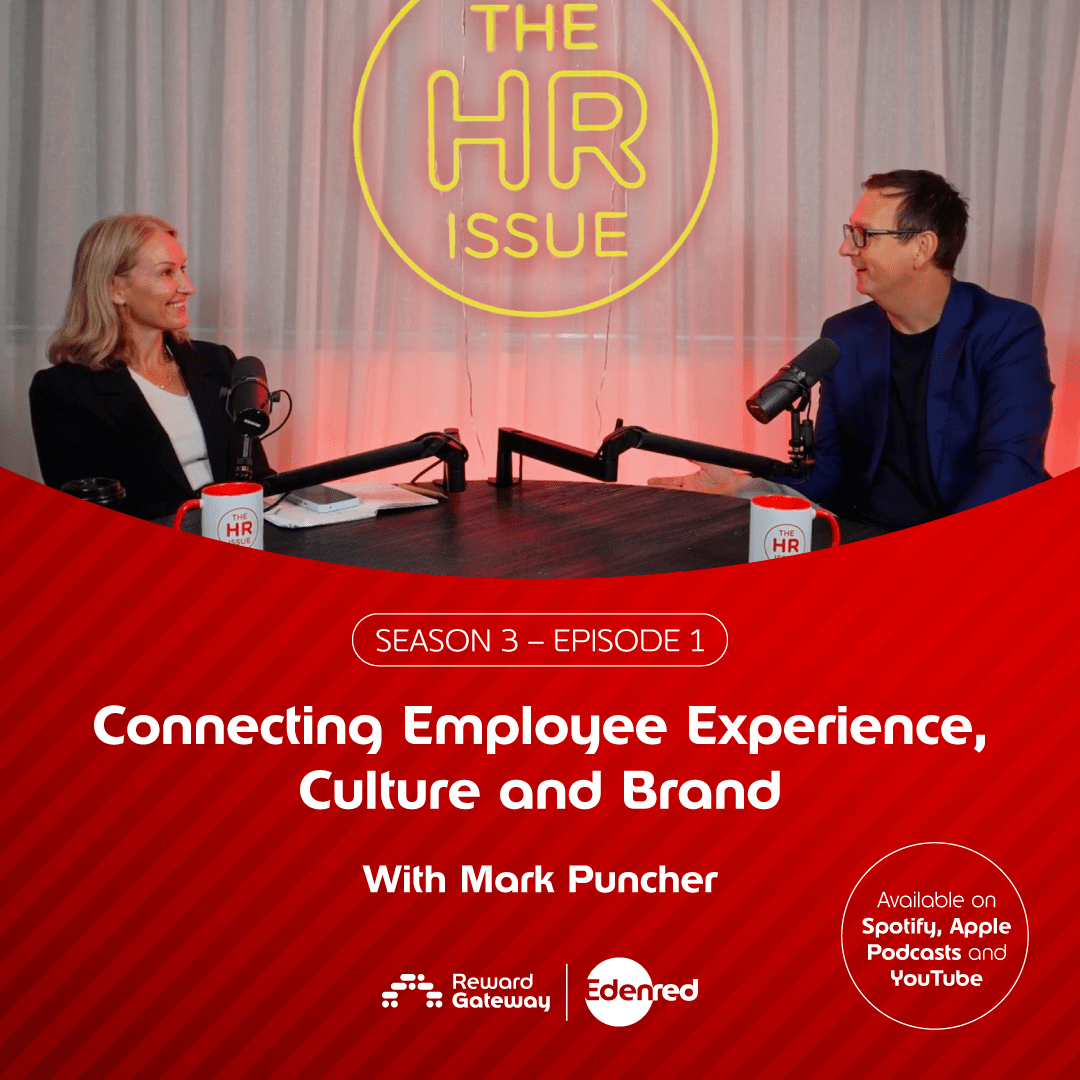
In the opening episode, Kylie Terrell is joined by Mark Puncher, Founder and CEO of Employer Branding Australia, to explore what it takes to build a workplace people genuinely want to be part of.
Their conversation goes beyond employer branding as a recruitment exercise. It examines how employer brand, culture, communication and the everyday employee experience combine to shape what people believe about an organisation.
As workplaces navigate constant change, AI disruption and information overload, human connection matters more—not less.
Employees do not experience employer brand, internal communication, culture and recognition as separate business functions. They experience one organisation. When external promises, internal messages and everyday behaviours reinforce one another, they create a more consistent and believable employee experience.
Communication plays an important role, but genuine connection requires more than simply sending information. People need to understand what a message means for them, feel part of the organisation’s direction and see its values reflected in how people are treated.
Recognition can help turn those values into something tangible. When employees are recognised for behaviours that reflect what an organisation stands for, its culture becomes something people experience rather than something they are simply told about.
For HR leaders, the opportunity is to connect these different parts of the employee experience and ensure people can see, feel and participate in the culture the organisation wants to create.
Listen to Connecting Employee Experience, Culture and Brand
Give new managers the tools to lead well
Organisations regularly promote talented individual contributors into management. With the right preparation, these new leaders can become some of the most influential drivers of employee experience and performance.
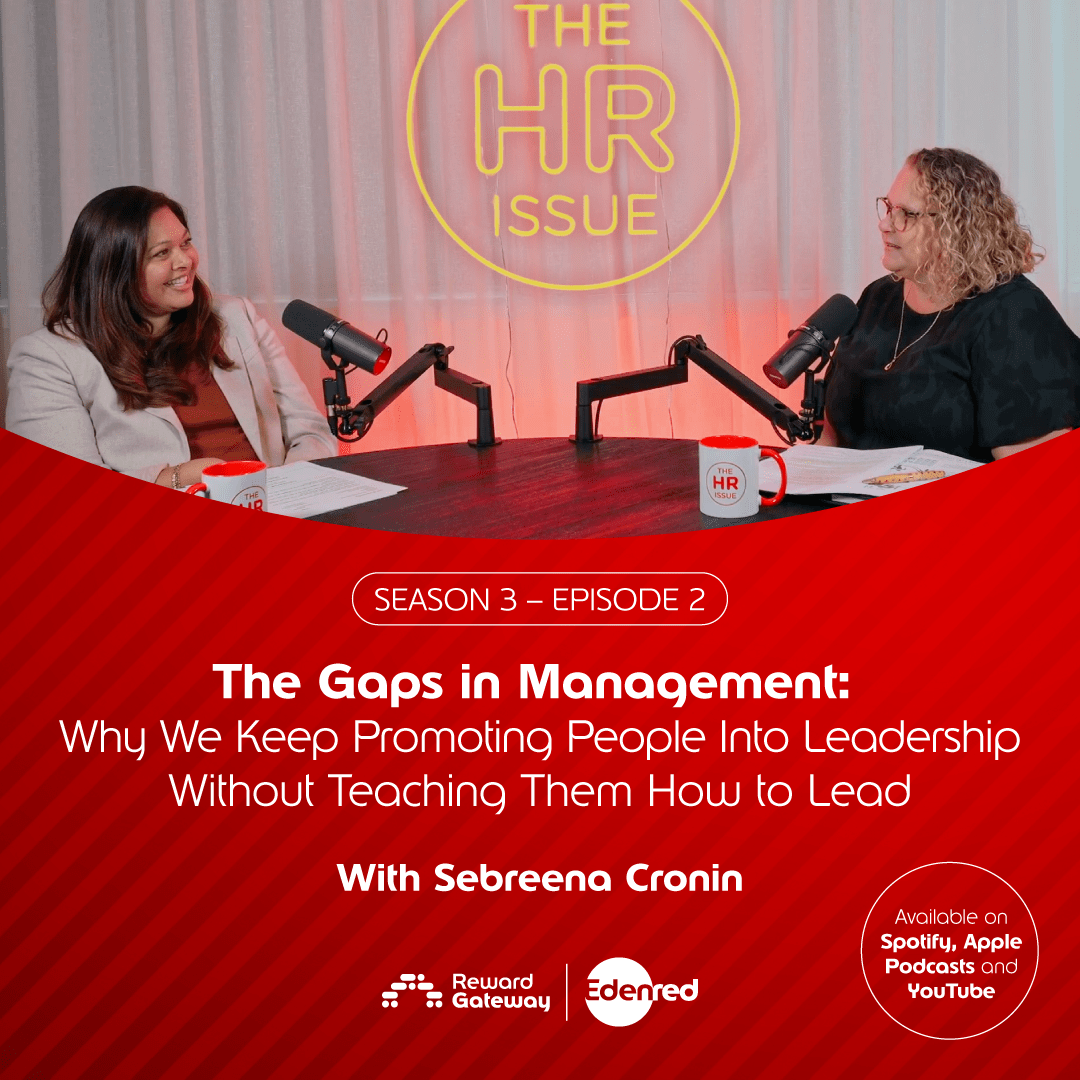
In episode two, Kameel Martin speaks with Sebreena Cronin, Founder of Cronin Consulting and former global people strategy leader at 3M, about how organisations can better support the transition from high performer to people leader.
The role introduces a different set of responsibilities. A new manager may suddenly need to delegate, give feedback, build trust and manage former peers, all while navigating their own imposter syndrome.
As discussed in the episode, only 15% of new managers receive formal leadership training. This leaves significant room for organisations to improve the way they prepare people for one of the most important transitions in their careers.
Sebreena argues that promotion should mark the beginning of leadership development. Formal training can build essential skills, but managers also need practical support as they apply them in real situations.
Mentoring, buddy systems, regular check-ins and clear 30-, 60- and 90-day plans can help new leaders build confidence. Organisations can also strengthen leadership by recognising not only what managers deliver, but how effectively they support, retain and develop their people.
Rather than expecting new managers to arrive fully formed, HR leaders can create an environment in which leadership capability develops over time. This benefits the manager, their team and the wider organisation.
Turn employee listening into meaningful action
Understanding what employees are experiencing gives organisations the opportunity to respond more effectively and create meaningful change.
In episode three, Kylie Terrell is joined by Claire de Carteret, Managing Director APAC at Gallup, and Kylie Green, Managing Director APAC at Reward Gateway | Edenred, to explore how leaders can build a clearer picture of engagement across their organisations.
Figures shared during the episode show that only 20% of employees globally are engaged, the lowest level since 2020. In Australia and New Zealand, engagement sits at 21%, following a two-percentage-point decline.
The conversation also highlights an approximately 25% gap between leaders’ perceptions of engagement and employees’ experiences.
While these figures are challenging, they also demonstrate the opportunity for leaders to listen more closely and use employee feedback to shape targeted action.
Managers are central to this. According to the data discussed, as much as 70% of the variation in employee experience can be determined by the local manager. Yet only one in four people managers says they feel equipped for the role.
By supporting managers to have regular, meaningful conversations with their teams, organisations can better understand what people need, respond earlier to emerging challenges and help employees connect their contribution to a wider purpose.
Annual engagement surveys can provide valuable information, but listening should be continuous. Pulse surveys, regular check-ins and everyday conversations can give leaders a richer understanding of the employee experience.
Just as importantly, employees need to see what happens next. Showing how feedback has informed decisions helps people feel heard and builds confidence in the listening process.
Listen to The Leadership Blind Spot: Why Engagement Is Declining Without Leaders Realising

Creating positive change through everyday action
The first three episodes of The HR Issue explore different workplace challenges, but point to a shared opportunity: HR leaders can make a meaningful difference by focusing on how work is experienced by their people.
That means building human connection into culture and communication, giving managers the tools to lead confidently and turning employee feedback into visible action.
None of these changes relies on a single large-scale initiative. They are created through consistent decisions and everyday interactions that help people feel connected, recognised and supported.
The HR Issue will continue to bring together leading voices in HR, leadership and employee experience to explore how organisations can create more human workplaces where people and performance thrive.
Catch up on The HR Issue, a podcast from Reward Gateway | Edenred by clicking here.
RELATED TERMS
An employee is a person who has signed a contract with a company to provide services in exchange for pay or benefits. Employees vary from other employees like contractors in that their employer has the legal authority to set their working conditions, hours, and working practises.
 Want to see more stories from trusted news sources?
Make HR Leader a preferred news source on Google.