
Tomorrow, we’ll search experience
SHARE THIS ARTICLE

AI isn’t making judgement obsolete. It’s making it more discoverable, more transferable, and, perhaps for the first time, preservable at scale, writes Jacqueline (Jaci) Burns.
Every day, professional services firms lose decades of accumulated judgement when experienced people retire, resign, or even move roles. We’ve assumed there was very little we could do about it because tacit knowledge – the experience, judgement and intuition people carry in their heads – has been almost impossible to capture.
AI changes that assumption.
2 types of tacit knowledge
Until now, we’ve treated tacit knowledge as a single concept. I think AI is forcing us to recognise two quite different forms:
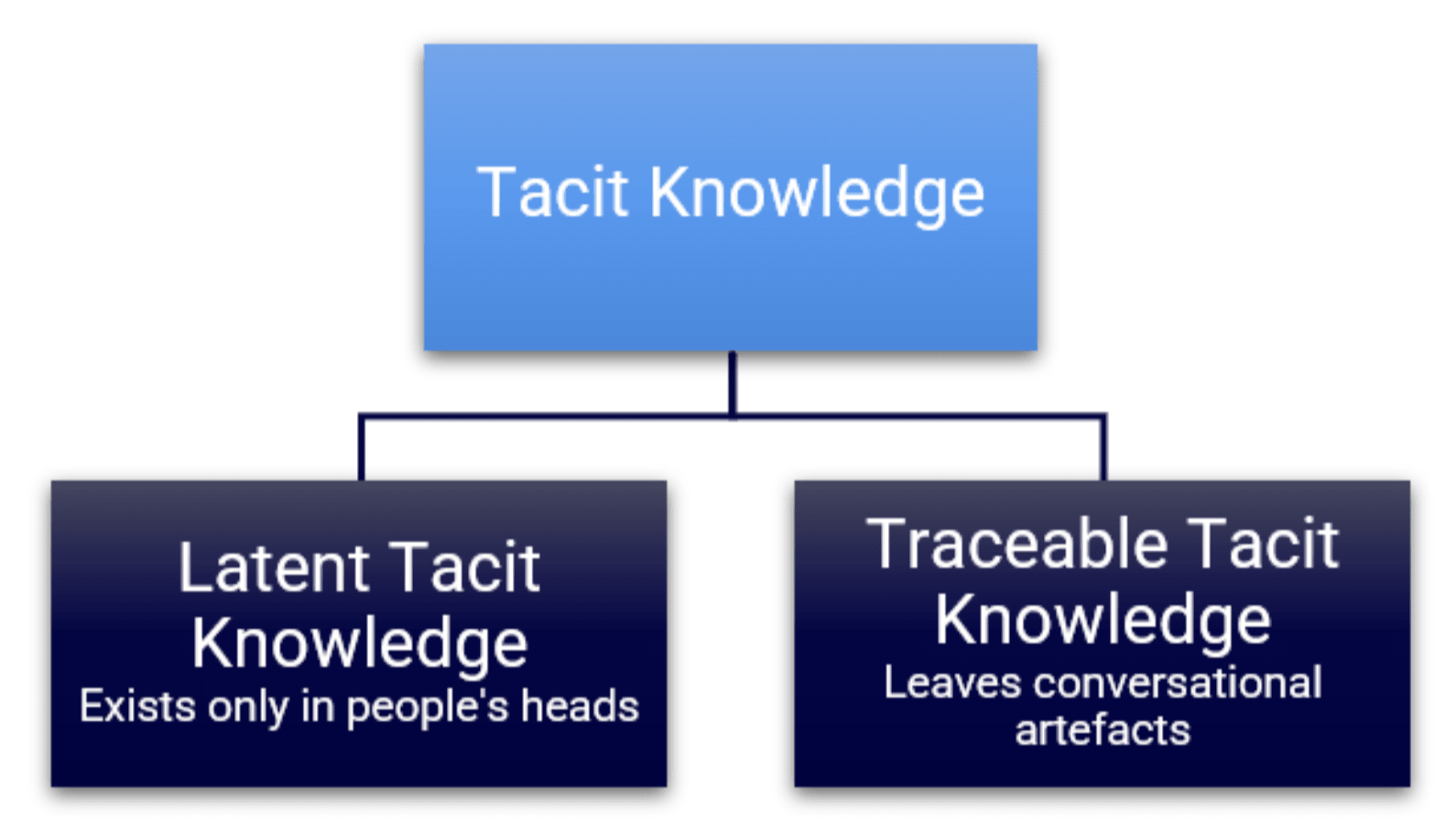
Latent tacit knowledge
- Exists only inside people’s heads until it is expressed.
- AI can’t access it.
Traceable tacit knowledge
- Leaves traces through conversations, observations, and everyday work – even though no one intentionally documented it (for example, meeting transcripts, Teams chats, proposal reviews, emails, workshops, voice recordings).
- AI can identify patterns of judgement across them.
AI gives us a new way of working with knowledge that leaves traces without ever being deliberately codified. In doing so, it changes what firms can preserve.
Consider the kinds of observations experienced professionals make every day:
- “I knew the client wasn’t convinced because he stopped asking technical questions and started asking about governance.”
- “Whenever this procurement team asks about transition in the first meeting, it usually means they’re unhappy with the incumbent.”
- “That engineer always underestimates the commissioning phase by about three weeks.”
- “The CEO says he wants options, but what he really wants is confidence.”
None of these statements is a fact. They’re observations, judgements, and pattern recognition built through experience.
A brief history of tacit knowledge capture
Traditionally, firms have attempted to retain tacit knowledge through lessons learned registers, project close-out reports, exit interviews, and debrief workshops.
They often fall short – not only because they lack the discipline to keep them current, but also because people don’t naturally think in document form. They think in stories.
AI can now learn from stories.
That means the economics of knowledge capture have changed completely. Instead of asking people to complete templates, we can simply ask better questions.
- When did you first realise something was wrong?
- What assumptions turned out to be incorrect?
- What signals did everyone else miss?
- What would you do differently next time?
Tomorrow, we’ll search experience
For decades, we managed documents. Tomorrow, we’ll search experience.
Imagine interviewing 100 litigation partners. From those transcripts, AI might discover that 87 independently associated a client’s sudden focus on settlement timing with declining confidence in their legal position. No individual lawyer identified the pattern, but AI did.
Now imagine someone asks, “Has anyone ever dealt with a client refusing to sign a pain-share mechanism?” Instead of searching SharePoint, AI searches project debriefs, Teams meetings, proposal reviews, emails and interview transcripts. It identifies similar experiences across multiple projects and surfaces the warning signs that preceded them.
Of course, none of this works unless people are willing to externalise what they know. If firms don’t encourage reflection, AI has nothing to learn.
AI still has limits
Professional services firms have always competed on expertise. They may soon compete on how effectively they preserve and compound it. Firms that systematically capture and connect organisational judgement will learn faster than competitors who continue to lose it through staff turnover.
Every retirement, resignation, or internal transfer takes decades of judgement with it. AI gives us a realistic opportunity to preserve far more than we ever could before.
AI isn’t making judgement obsolete. It’s making it more discoverable, more transferable, and, perhaps for the first time, preservable at scale.
If your most experienced people left tomorrow, how much of their judgement would remain?
Jacqueline (Jaci) Burns is the founder of Market Expertise.
RELATED TERMS
The practice of actively seeking, locating, and employing people for a certain position or career in a corporation is known as recruitment.
 Want to see more stories from trusted news sources?
Make HR Leader a preferred news source on Google.
