
The real skill gap right now is a thinking gap – here’s how to close it
SHARE THIS ARTICLE
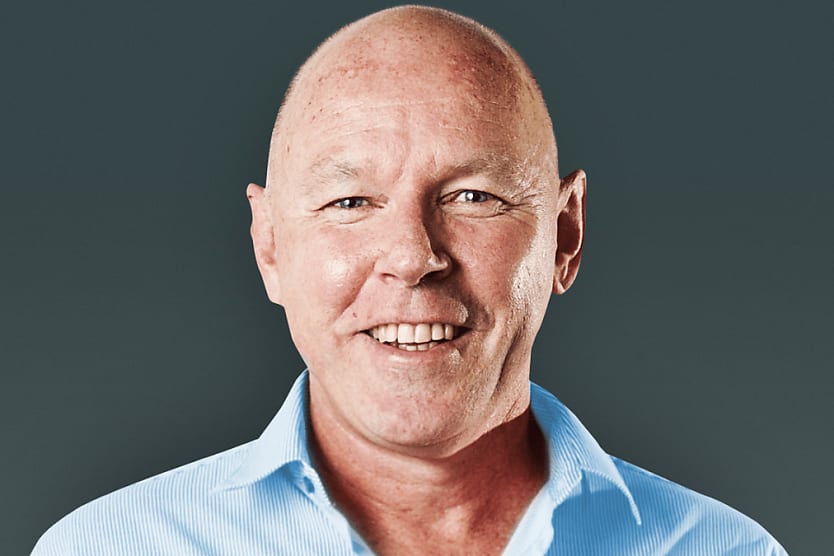
The goal shouldn’t be to outsource our thinking to AI. It should be to make our individual and collective thinking stronger, writes Dr Ken Hudson.
Let’s think about thinking.
I suspect it’s not something that most of us think enough about. But increasingly it might be one of the most important skills for all leaders and their teams, particularly in an AI-dominated era.
Here’s my starting point: thinking is a skill like any other, such as listening, playing an instrument or hitting a golf ball. And like any skill, it can be practised, developed, and improved. All you need are the right tools, a conscious effort and some encouragement. This means that we can all develop the new skill of thinking with AI rather than surrendering to it.
We now know that the brain is far more plastic than we have previously realised. It can change, reorganise and rewire its neural pathways. Hence, our thinking can also adapt; it’s not fixed. As a result, we can let go of many of our previous beliefs about what, when and how to think.
But here is the challenge we all face. It’s tempting for many of us to outsource all of our thinking to AI. I believe this is a big mistake and can create a thinking gap, which I define as “when the technology advances faster than our ability to think critically, creatively and independently alongside it.”
For example, many years ago my numeracy skills were quite advanced because I did much of the adding and multiplying in my head. But today my numeracy skills have declined just through lack of practice, and tools such as calculators and AI are faster and more advanced than I ever will be. But I have retained a basic understanding of numeracy to check and challenge AI if the answer doesn’t feel right.
This example is salutary because I still have agency over my numeracy results. I am in control. However, when we completely delegate our thinking to AI, how can we know if what it produces is accurate? Who is really in control of our thinking?
We need a new approach.
What if we started to think about this formula:
Total Thinking = Human Thinking x AI Capability
Each amplifying the other.
This new approach requires humans to focus on what they do best, such as imagination, empathy, intuition, judgement and learning by doing.
AI excels at processing, sorting and evaluating large amounts of data and information in seconds. This new approach suggests that the future belongs to people who can switch between human and AI thinking, so knowing when to rely on themselves, when to use AI and when to combine the two. For example, one way I use ChatGPT is that after every conversation I ask it to develop an image that captures our interactions. The images it generates can be quite surprising and stimulate my thinking even more.
In my Switch Thinking approach, I use AI to respond to my prompts in two distinct ways that I call Box Mode (i.e. structured, linear, analytical) and Ball Mode (i.e. unstructured, imaginative and playful). The magic is the synthesis and connections between human and AI in both Box and Ball Modes.
Consider this situation:
How can you as a leader motivate a seemingly disengaged team member?
Operating in Box Mode, you analyse the situation, talk to the person and their peers. This makes perfect sense. Then you can switch to Ball Mode and ask the demotivated person to lead a session on something they feel passionate about. To further enhance the employee’s engagement, prompt AI in Ball Mode, it suggests:
Ask the team member, what is one thing around here you would love to fix?
And further, imagine yourself in six months’ time, and you are loving your role; what has changed?
These are great questions that a leader might not have considered.
Notice the flow. There is a situation that you noticed as a leader (i.e., a demotivated employee); you thought of a new way to handle this in Ball Mode, then you asked AI to enhance your ideas in Ball Mode. You can equally ask AI in Box Mode to suggest some potential pitfalls in your approach. Whichever way you proceed, the overall impact of your ideas has increased.
The potential for this human and AI thinking collaboration is endless. It could lead to better problem solving, decision making and more effective leadership. It might mean that thinking skills can be enhanced and customised for every individual, group and organisation.
The thinking gap between humans and technology is something we need to be conscious of.
I recently visited the Imperial War Museum in London, and they have a particularly impressive display on the First World War. I was struck by the idea that at the start of the war, generals were trapped in an outdated mindset, leading to terrible casualties as cavalry charges ran into rapid-firing machine guns. Human thinking (i.e. beliefs, assumptions, experiences) had fallen behind the technology of the day.
The key message?
Our human thinking needs to continuously evolve and lead AI, not the other way round. We all need to be continuously encouraged to think for ourselves, make new connections and challenge AI when necessary. The goal shouldn’t be to outsource our thinking to AI. It should be to make our individual and collective thinking stronger.
This requires a new kind of future skill set: Human Thinking x AI Capability, which might just be one of HR’s most important new roles.
Dr Ken Hudson is the author of Switch Thinking and has a PhD in Organisational Creativity.
RELATED TERMS
A skill is a capacity to carry out a particular, necessary task at work.
 Want to see more stories from trusted news sources?
Make HR Leader a preferred news source on Google.
