
‘A single architecture of exploitation’: Alarming rates of migrant worker exploitation unveiled
SHARE THIS ARTICLE
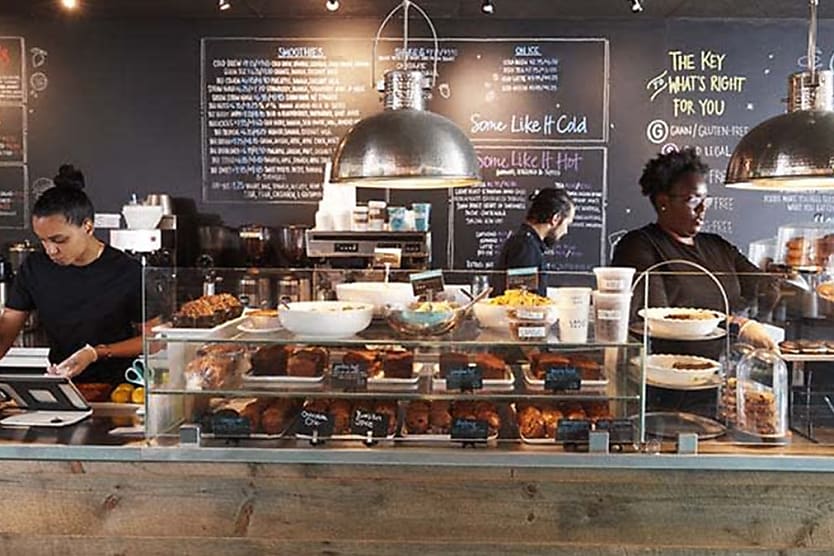
More than half of migrant employees in Australia are underpaid an average of $8.80 an hour, with new research revealing this is not an honest mistake by employers.
Figures are reaching billions, according to a landmark survey of almost 10,000 migrant workers in Australia.
According to UNSW Sydney, Australian businesses systematically underpay some of their most vulnerable employees, with more than two-thirds (65 per cent) receiving less than legal entitlements as stated in the Fair Work Act. International students alone are being underpaid more than $60 million every week, totalling $3.18 billion a year.
The study was supported by the Commonwealth Attorney-General’s Department National Action Plan to Combat Modern Slavery grant program, with the final product, Off the Books: Inside Australia’s hidden system of migrant worker exploitation, led by academics Associate Professor Bassina Farbenblum from UNSW Law & Justice and Associate Professor Laurie Berg from the University of Technology Sydney (UTS) Law.
Released today by the Migrant Justice Institute (MJI), the findings come from the largest national study of migrant working conditions in Australia, making it the clearest, modern picture of migrant worker exploitation thus far.
Responses from international students, sponsored workers, graduates, backpackers, and other temporary visa holders showed not only how rampant underpayments are, but also a systematic practice of trying to hide them.
According to the research, the degree of exploitation is in accordance with the level of underpayment. The less they receive, the more likely they are to receive falsified payslips, be paid in cash, be victims of unauthorised deductions, not receive super or a payslip at all, and experience poor or coercive working conditions.
Farbenblum, MJI co-executive director, highlighted how almost three-quarters of migrant workers are typically contract (using an ABN) or casual employees “whose shifts could be easily cut or stopped altogether in retaliation for complaining about their conditions”.
Unsurprisingly, these workers “were twice as likely to be paid less than the National Minimum Wage – let alone casual loading and penalty rates”.
The rates of migrant workers on an ABN (35 per cent) are four times that of Australian rates in the general workforce, and in addition, the report found that many of these workers were likely misclassified and engaged on an ABN to avoid being paid the minimum wage, superannuation, and Fair Work Ombudsman (FWO) oversight.
According to Berg, MJI co-executive director, this is a deliberate tactic by certain employers to conceal non-compliance, with 85 per cent of ABN workers receiving less than they would have otherwise.
She said: “This isn’t a gap in the system. It is the system. Data shows for the first time that underpayment, misuse of ABNs, and falsified records are not separate problems – they operate together as a single architecture of exploitation when it comes to migrant workers.
“Businesses that want to underpay migrant workers have a ready-made toolkit, and too many are using it.”
Farbenblum said: “Nearly 10,000 workers told us again and again of their fear – of losing shifts, of immigration consequences, of being reported to authorities by the very employer who was underpaying them.”
“Some workers were explicitly threatened. Others didn’t need to be. The threat was implicit in every casual roster and every ABN arrangement.”
She continued: “When an employer controls whether you work next week and whether your visa remains intact, the power imbalance is enormous, and predictably, employers exploit it. The system is now clear, and demands a deep and urgent government response.”
The report made a number of recommendations, including: strengthening the Workplace Justice Visa, reporting protections and accessibility across states to facilitate speaking up, expanding sham contracting accountability and reducing ABN misclassification, linking employer sponsorship eligibility to their compliance history, investing in government enforcement and support for migrant workers through federal bodies, and introducing enforceable due diligence obligations under the Modern Slavery Act.
Berg said: “Business can’t keep treating this as someone else’s problem. If they are sourcing goods or labour, they should know what those workers are actually being paid.
“The indicators are hiding in plain sight – no payslips, cash wages, ABN arrangements in industries where they make no sense. Any business that looks will find them. The question is whether they want to look.”
Farbenblum said: “This is a market integrity failure, and everyone is paying the price. Honest businesses are being undercut by competitors gaining a cost advantage on the backs of underpaid migrant workers.
“Nobody wants to buy goods or services produced by exploited migrants in Australia – but right now, we all almost certainly do.”
RELATED TERMS
An employee is a person who has signed a contract with a company to provide services in exchange for pay or benefits. Employees vary from other employees like contractors in that their employer has the legal authority to set their working conditions, hours, and working practises.
 Want to see more stories from trusted news sources?
Make HR Leader a preferred news source on Google.


