
Council worker strike set for day of Victorian state budget disclosure
SHARE THIS ARTICLE
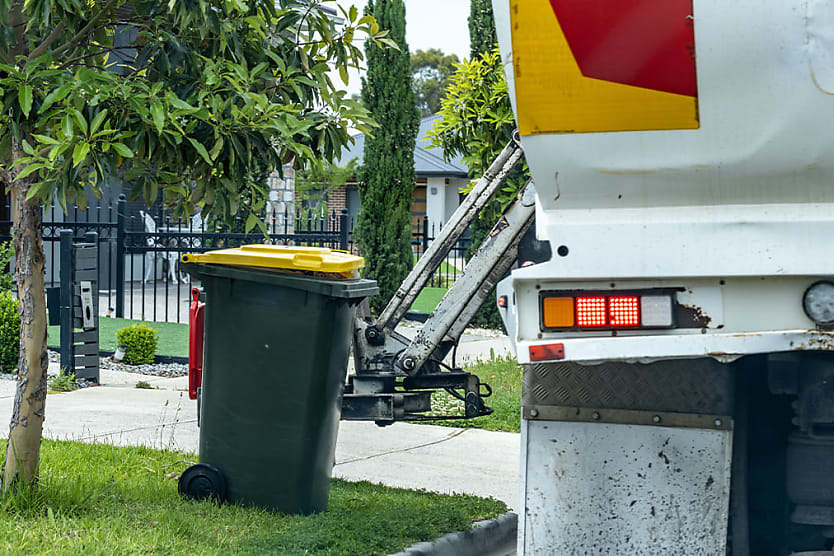
The Australian Services Union is representing an estimated 7,000 council workers in continued negotiations for a new employer agreement.
Further to the 7 April stop-work by waste collection workers and parking officers across numerous Melbourne councils, the Australian Services Union (ASU) this week announced a temporary lift of current waste collection and street cleaning bans ahead of a coordinated, 24-hour strike on 5 May.
The first of its kind in over a decade, it deliberately coincides with the release of the Victorian state budget.
While the ASU is the lead union that officially called for the 24-hour strike, a Joint Bargaining Committee was established with the Australian Manufacturing Workers Union, the Electrical Trades Union, and the Association of Professional Engineers, Scientists and Managers for negotiations of a multi-employer agreement (MEA).
All four unions are calling for a 22 per cent pay increase over four years, with annual rises capped at 4 per cent or the rate of inflation (whichever is higher) and a 10 per cent “recovery” increase this year to account for inflation.
While the demands remain the same from the 7 April action, the larger strike – involving members of all departments represented by the ASU – signals a clear escalation.
Earlier this week, ASU Victoria and Tasmania secretary Tash Wark said: “Undertaking a city-wide strike is a last resort. Our members take immense pride in serving their communities, but after 18 months of being ignored, they have been left with no other choice.”
“It is a total failure of leadership that councils continue to turn up to negotiations unprepared to offer wage increases during this cost-of-living crisis.”
She added: “We are in a compounding cost-of-living and fuel crisis, and expecting these essential workers to keep taking pay cuts while delivery demands soar is a disgrace.”
“If the money can be found for those at the top, it can be found for the people who keep our cities running.”
In its statement, the ASU also highlighted how Victorian council workers “have received pay increases as low as 1.5 per cent a year, far below cost-of-living increase. On average, council workers’ pay has fallen between 7 and 12 per cent in real terms (when compared to inflation).”
The union also referenced inadequate staffing, low investment in equipment and resources, increasing stress, and unsafe work practices.
More than 1,000 council workers are expected to walk on the job on 5 May – and they’re not the only ones.
Similar action will also be undertaken in early May by the Australian Education Union (AEU), with Victorian public school staff stopping for half a day “on a rolling, region-by-region basis, starting in state budget week”.
AEU Victorian branch president Justin Mullaly explained that Victoria had the lowest funded public schools and teachers in the country, adding: “Premier Jacinta Allan and Education Minister Ben Carroll are taking them for granted.
“If they care about public school students and families, and want to properly address chronic staffing shortages, they need to immediately fully fund public schools and offer public school staff pay increases that properly reflect the value of their work.”
As part of the half-day strikes, teachers will not include written comments in student report cards, implement new government initiatives, attend some meetings, or respond to Department of Education emails.
Following the statewide, full-day stop work earlier this year – which, according to the union, saw more than 35,000 public school staff marching in Melbourne CBD – the ban on Labor members of Victorian Parliament visiting schools will continue.
While the planned action remains entirely separate from the aforementioned council workers strike, it is anticipated to increase pressure on the Treasurer.
Announced by the ASU yesterday (22 April), council services will resume from today (23 April) in the eight affected areas – Hume, Merri-bek, Yarra, Darebin, Melbourne, Greater Dandenong, Hobsons Bay, and Maribyrnong – as the workers hold a two-week pause on industrial action in support of the community and to prepare for the anticipated industrial action early next month.
Acknowledging the impact on the community, the ASU Victoria and Tasmania secretary said: “We appreciate the community’s frustration regarding bin collections and other service disruptions over recent weeks. Our members take great pride in their work, and this pause is to support residents while we prepare for our next major step.”
According to the union, it will be the largest strike of local government workers in Australian history on State Budget Day.
Wark said: “Our message to the state government and council CEOs remains the same: you cannot expect essential workers to endure a 12 per cent real wage cut while councillors enjoy 20 per cent pay rises.”
“We encourage members of the public to join us at Parliament on 5 May to show their support for the workers who keep our communities running and demand proper investment in local government.”
 Want to see more stories from trusted news sources?
Make HR Leader a preferred news source on Google.


