
Rebel Wilson fabricated sexual harassment story for own gain, rising Aussie actress alleges
SHARE THIS ARTICLE
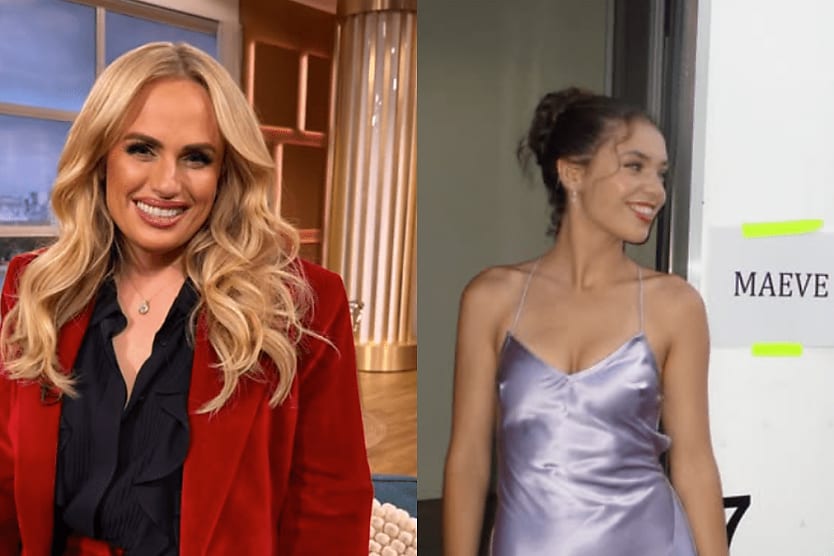
Rebel Wilson was accused of fabricating sexual harassment allegations concerning The Deb’s lead actress, Charlotte MacInnes, to use as leverage in a dispute with producers over budget and writing credits.
Less than a fortnight after her directorial debut with the release of screenplay-turned-film The Deb, Rebel Wilson has appeared in the Federal Court of Australia to defend herself against defamation proceedings brought by young star Charlotte MacInnes.
The proceedings got off to a rocky start, with Sue Chrysanthou SC accusing Wilson, her lawyers at Dentons in Australia, and her United States lawyers, of “insufficient compliance” with production orders.
Chrysanthou said material was redacted without a court order, text messages between Wilson and witnesses were not produced, and she was sent expired links to documents Wilson shared with media.
Ahead of witness evidence on Friday, Chrysanthou said it “beggars belief” that text messages between Wilson and a particular witness have not been handed over. The leading defamation silk added “it is impossible” that Wilson’s lawyers do not have them.
Wilson’s lawyers have been told to comply within the next day.
At the centre of the proceedings is a bath MacInnes shared with producer Amanda Ghost in September 2023 after the latter had a medical episode from swimming in the waters of Bondi Beach.
Wilson alleged MacInnes told her she was “uncomfortable”, while MacInnes claimed she never made any such complaint.
Appearing for MacInnes, Chrysanthou claimed Wilson used this allegation as “leverage” as part of a dispute with English producers around budget and contracts. It was also allegedly deployed in a later letter in which she accused the producers of “unethical” conduct.
“[Wilson] doesn’t seek any advice about whether it should be pursued but raises it as leverage in that dispute, and we say this is a habit of hers whenever she doesn’t get her way,” Chrysanthou said.
In her defence, Wilson also alleged MacInnes walked back the complaint because Ghost could support her growing career.
On this, Chrysanthou said there was “not one document or one piece of evidence … that could come within a mile of proving Charlotte MacInnes stopped the release of this film”.
Appearing for Wilson, Dauid Sibtain SC said the court would not need to make a finding as to whether the bath incident constituted inappropriate conduct or sexual harassment.
Instead, he said it was whether Wilson was told and acted on it.
Sibtain alleged MacInnes supported Ghost’s version of events because the producer could assist with job opportunities. She did so by issuing a media release and providing sworn declarations in litigation launched by the producers against Wilson in California.
On the issue of damages, Sibtain argued MacInnes has not suffered any professional reputational damage as a result, citing an upcoming release of new music and her being cast in a musical role.
Sibtain also pointed to a recent TikTok posted by MacInnes in which she says her “biggest flex is I’m doing all the things I said I’d do”.
She said, she said: Allegation tied to producer disputes
Chrysanthou took the court to text messages shared between MacInnes and Ghost in the hours and days after the bath incident in which the two appear to be on friendly terms.
Also in evidence were text messages between Wilson and Ghost in which the former said she spoke to MacInnes and confirmed that “all [is] good” and there were “zero issues at all”.
However, between 5 and 18 September, Chrysanthou said Wilson began treating MacInnes not as an alleged victim, but as a “liar who made up allegations about Amanda Ghost”. At that time, there was evidence of a close relationship between Wilson and Ghost.
Then in mid-October, following the budget issue, Wilson was embroiled in a dispute with Hannah Reilly, the writer of The Deb’s screenplay and who was responsible for turning it into a film script.
Not long after the Australian Writers Guild found in favour of Reilly, Wilson sent an email to the president of Access Entertainment – the holding company of AI Films, which funded The Deb – to claim she was receiving legal advice about suing the film.
In June 2024, an American lawyer for Wilson sent off a letter to the producers that included allegations of sexual harassment and alleged embezzlement of $900,000 from the film’s budget.
“She does have a law degree, Your Honour, she knows the difference between right and wrong, and she has said as much to the Australian public during her 60 Minutes conversation, so she must know what the word embezzlement means, one would think,” Chrysanthou said.
PR agency and ‘despicable’ website allegations
Around the time of the American lawyer’s letter and the producers’ California litigation, Wilson engages PR agency Tag.
In conversations between employees of Tag shared with the court, they discuss concocting false, “serious and despicable” allegations about Ghost, including that she is the “Indian Ghislaine Maxwell”.
Those allegations then appear on websites alongside allegations concerning MacInnes and the bath incident.
Chrysanthou said Wilson’s position that she had nothing to do with the websites or the allegations on them “beggars belief”.
“Wilson pursued the publication of these websites – directed of course to Ghost but impacting my client as being identified as a person who effectively sells sexual favours in exchange for parts.
“It goes beyond that because Wilson, as part of promoting her version of events through The Daily Mail and 60 Minutes during the course of proceedings, has pursued this lie,” Chrysanthou alleged.
Sibtain said there was an “insufficient nexus” between the publication of the alleged defamatory material and the websites.
“The websites are a distraction … from the critical issues in this case.
“The critical issue is did MacInnes in fact make a complaint to Wilson and then, realising, understanding it would be fatal to her career if she maintained that complaint, she withdrew it and denied it had ever been made,” Sibtain said.
The proceedings are continuing this week.
RELATED TERMS
Harassment is defined as persistent behaviour or acts that intimidate, threaten, or uncomfortably affect other employees at work. Because of anti-discrimination laws and the Fair Work Act of 2009, harassment in Australia is prohibited on the basis of protected characteristics.
 Want to see more stories from trusted news sources?
Make HR Leader a preferred news source on Google.
