Sacked supervisor who allegedly caused safety breach wins $39k
SHARE THIS ARTICLE
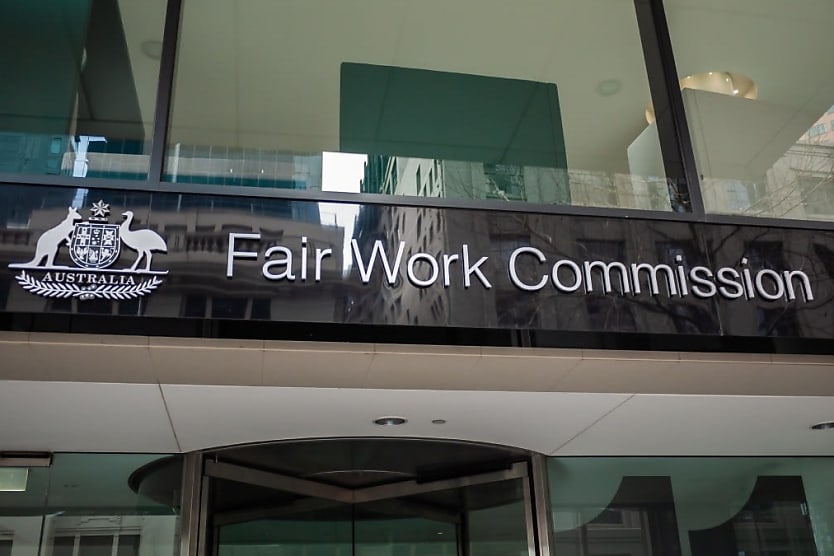
After finding that his employer failed to provide a written warning and a reason to respond, the Fair Work Commission upheld a worker’s unfair dismissal claim despite safety breach accusations, awarding nearly $40,000 in compensation.
An employee was immediately fired for allegedly letting a subordinate use an emergency evacuation door to unload supplies, undermining a supervisor, blurring professional and personal boundaries, and taking leave without approval.
In her 23 March 2026 decision, Fair Work commissioner Pearl Lim determined that the employee’s conduct did not warrant dismissal, ruling that the dismissal was unfair for the lack of any written warnings, not providing an opportunity to respond, and the lack of notification of the reason for his termination meeting.
Lim ordered the employer to pay the worker $39,498.90 for lost wages.
The employee, Kee Onn Yong, commenced employment as a supervisor with his employer, UGC Holdings, in July 2024. UGC is a civil contracting and commercial landscaping company based in Perth, Western Australia.
On 2 October 2025, Yong attended a meeting with HR, during which he was informed of his summary dismissal for alleged serious misconduct.
Meeting minutes recorded that UGC raised an issue with Yong, allegedly allowing another employee to use an emergency evacuation door as an access point between the depot and the outside yard to load and unload vehicles.
At the beginning of September 2024, an A4 paper with the words “no entry or exit” was pasted on the door with the handle shackled with a chain. No explanation was given to Yong about why this was done.
On 16 September 2025, another supervisor told Yong that a manager had put the sign up. Yong expressed to the supervisor his desire to know why the door was blocked so he could explain it to his crew.
In the afternoon of the same day, Yong encountered the manager and asked why the door was blocked off. Yong submitted that the manager responded to the effect that the crew did not need to know the rationale; they just needed to follow instructions.
Yong submitted that at the time, he was of the position that until he was told why the door had been blocked off, he would continue using the door as an access way, because he does not “blindly follow instructions without being told the reasons why”.
UGC submitted that this conduct constituted serious misconduct as Yong knowingly allowed an employee to use this “no-authorised access” side doorway, as it was a breach in the company’s safety protocol and was a “huge lack of regard” for the company and his role as supervisor.
Lim said: “I find that Mr Yong allowing staff to use the side door was not sufficiently serious enough to warrant dismissal, particularly summary dismissal.
“It seems to me that staff using the side door is less of an issue to any safety evacuation plan than UGC shackling the door without explanation.”
The commissioner heard that between 16 September 2025 and 2 October 2025, UGC did not give any indication that it had any issues with Yong’s conduct or that it was considering terminating his employment.
Further, Lim ruled that UGC had predetermined Yong’s dismissal before the 2 October 2025 meeting and did not provide him with any written warnings or an opportunity to respond, ruling the dismissal invalid and unfair.
In addition, Yong submitted that he had applied for jobs following his termination and obtained new employment on 17 November 2025. He also gave evidence that he considered the role with UGC a career job, saying that if he had not been terminated, he would have worked at least another year with the company.
Upon consideration of the evidence, Lim approved Yong’s unfair dismissal application and ordered UGC to pay him $39,498.90 plus superannuation in compensation, calculated based on 26 weeks of wages that he would have earned.
The case citation: Kee Onn Yong v UGC Holdings Pty Ltd (U2025/16366).
RELATED TERMS
Compensation is a term used to describe a monetary payment made to a person in return for their services. Employees get pay in their places of employment. It includes income or earnings, commision, as well as any bonuses or benefits that are connected to the particular employee's employment.
A supervisor is a member of staff who is senior to other employees and has the power to delegate work tasks, discipline employees who work under them, interview job candidates, handle complaints and grievances, and generally make independent decisions about how to run the business following more general business principles.
When a company terminates an employee's job for improper or illegitimate reasons, it is known as an unfair dismissal.
 Want to see more stories from trusted news sources?
Make HR Leader a preferred news source on Google.