Profanities not a fireable offence for sacked hairdresser
SHARE THIS ARTICLE
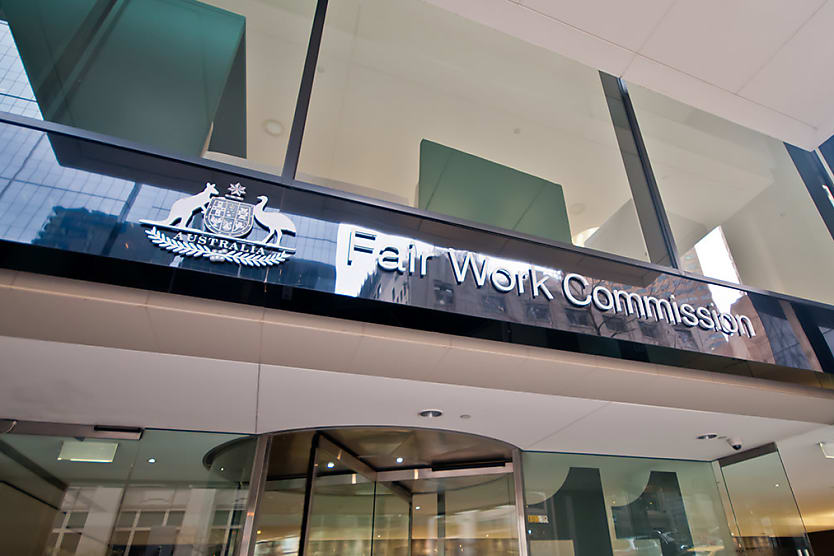
A hairdresser won her unfair dismissal case after the Fair Work Commission ruled that saying unthreatening profanity, such as “this is bullsh-t” during an argument, does not amount to serious misconduct.
At a 7 October 2025 hearing before the Fair Work Commission, Oz Seaside Hair and Beauty alleged that in the midst of an argument with her manager one day into her termination notice period, its former employee, Tamara Depp, threatened her superior, saying: “I hope karma gets you like the c-nt you are.”
Deputy president Nicholas Lake found that although this statement was profane, he did not agree that it was a threat, but rather an appeal to karmic intervention.
Despite this determination, the commission suggested that the reliability of this quote was questionable.
Ultimately, the commission accepted Depp’s unfair dismissal claim and ordered her employer to pay her one month’s remuneration as compensation for lost wages.
Depp worked as a senior stylist for Oz Seaside Hair and Beauty, commencing in this role under a different owner on 16 January 2024.
When the company was sold on 2 December 2024, Depp was transferred as an employee and was paid the same casual base rate of $38 per hour and $43 per hour on Saturdays.
On 7 June 2025, the salon’s manager allegedly rebooked one of Depp’s clients with another stylist, which may have left her incensed. The two got into an argument, with Depp allegedly calling her superior a “terrible manager”.
On 9 June 2025, Depp was terminated by an email from the company’s director, noting that her behaviour during the 7 June argument was “deeply concerning”, was “not acceptable in a professional setting”, and put the salon’s reputation “at risk”.
Although her employer dismissed her with two weeks’ notice, Depp agreed to work through this notice period.
On 11 June, one day into her notice period, Depp got into another fight, where she accepted, saying to her manager, “this is bullsh-t” in the heat of the argument.
Depp was asked to leave the salon immediately, and her employer said the notice period was “no longer a workable arrangement”, firing her on the spot.
At the hearing, Lake favoured Depp’s arguments, finding that at no point did her employer launch an investigation into the incident, provide any warnings, or offer her any opportunities to respond.
It also found that the company’s director took the manager’s representation of the argument at face value.
“In the cases of workplace arguments, at the very least, the employer should attempt to hear both sides, even through an informal discussion, before making a decision on termination,” the deputy president said.
The commission found that although Depp had engaged in inappropriate behaviour, her employer’s characterisation of having an argument with a manager twice and telling her “this is bullshit” as “threatening” is disproportionate, does not constitute serious misconduct, and is not a valid reason for termination – ruling the dismissal as unfair.
The commission thus ordered Oz Seaside Hair and Beauty to pay Depp $1,732.00 gross plus superannuation in lost wages, finding that due to the “animosity” and “fractious relationship” between the parties, it would not have been likely that she would have remained employed for another month had she not been terminated.
The case citation: Tamara Depp v Oz Seaside Hair And Beauty Pty Ltd (U2025/10618).
RELATED TERMS
Compensation is a term used to describe a monetary payment made to a person in return for their services. Employees get pay in their places of employment. It includes income or earnings, commision, as well as any bonuses or benefits that are connected to the particular employee's employment.
When a company terminates an employee's job for improper or illegitimate reasons, it is known as an unfair dismissal.
 Want to see more stories from trusted news sources?
Make HR Leader a preferred news source on Google.