
Parking inspector secures $8k payout after getting hit by a car while issuing a ticket
SHARE THIS ARTICLE
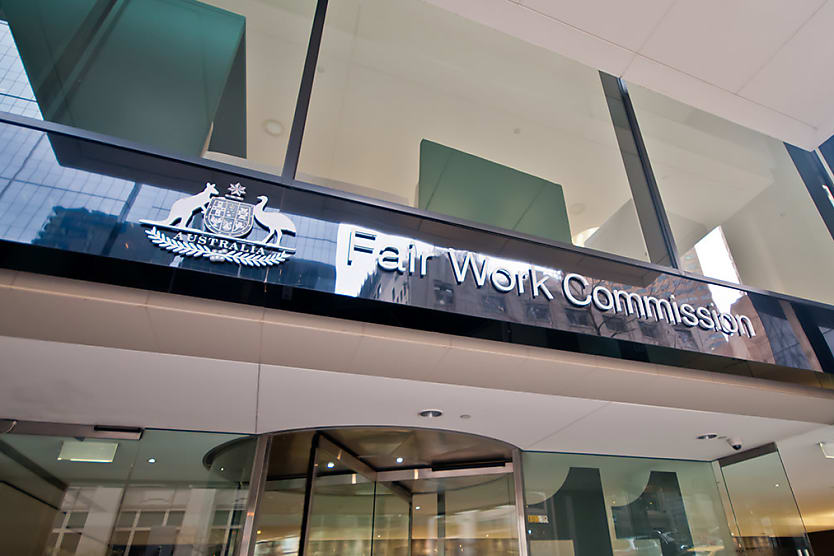
A 70-year-old parking inspector who was abruptly dismissed over email has been compensated over $8,000 after the Fair Work Commission found that his employer dismissed him on inadequate grounds.
On 2 December 2025, Fair Work Commission deputy president Ian Masson ruled that a Tasmanian parking inspector was unfairly dismissed after his employer terminated him via an email pointing to his inability to fulfil his role, despite being medically unfit to work following an injury suffered on the job.
A torn meniscus
Robert John Wilson was employed by Care Park on 15 January 2024 as a parking patrol officer, working in Launceston, Tasmania, on a permanent full-time basis.
Wilson has worked consistently since the age of 15, and at the time of his employment with Care Park, he was around 69 years of age.
Less than a year into the role, on 15 November 2024, Wilson was hit by a car while issuing a parking ticket in York Town Square carpark in Launceston. He was promptly taken to the hospital, where he learnt that he suffered a torn meniscus in his left knee.
Police infringement notice
Following his injury, Wilson completed an accident/incident report form and made a workers’ compensation claim. Subsequently, Wilson had submitted various certificates of capacity between 22 November 2024 and 31 January 2025, which indicated to his employer that he had no capacity to work.
He began receiving workers’ compensation payments shortly after.
On 30 December 2024, the Tasmanian Police issued Wilson a police infringement notice for “causing a traffic hazard as a pedestrian”.
Police charged Wilson for allegedly “deliberately moving into the path of a motor vehicle, and the attendant claimed that his injuries were non-compensable because he had arguably engaged in serious and willful misconduct”.
He was to appear in court on 23 June 2025.
Workers’ compensation
Wilson’s wife, Julie Norden-Wilson, said that her husband was forgetting things, so she took over driving responsibilities. The commission heard that Wilson and his wife planned on going to the doctors to check if he had dementia.
On 11 February 2025, Care Park disputed liability for Wilson’s weekly compensation payments, which went to a hearing. An order was made on 26 February 2025, under senior member Lucinda Jack, which found a “reasonably arguable case” for Care Park to not be liable for the weekly compensation payments to Wilson.
Resign or be terminated
Following the cessation of his weekly workers’ compensation payments, Wilson sent an email on 6 March 2025 to the general manager of Care Park SA/TAS, Catherine Foster, asking for clarification regarding his employment status with the company.
The next day, Foster replied by email, failing to address his inquiry about his employment status, and instead provided Wilson an opportunity to resign.
Despite Wilson not providing a response to this request, Masson took into consideration that he was to appear before the court for a police infringement notice on 23 June 2025.
On 23 June 2025, the court dismissed the police infringement notice case.
The same day, Wilson found an email from Care Park HR in his junk mail, dated 5 June 2025, which detailed the termination of his employment as a result of an absence from the workplace, the outcome of his workers’ compensation claim, his inability to “fulfill his duties” throughout the year, and there being “no foreseeable return to work” for him.
Inexcusable disinterest
Based on medical records, Wilson was medically certified as unfit to perform his normal duties from 15 November 2024 up until 31 January 2025.
Care Park accepted that it did not attempt to make contact with the applicant in the 12-week period between 7 March 2025 and the termination email on 5 June 2025.
From this, the commission found that Care Park had a “troubling and inexcusable disinterest on the part of the [Care Park] to the welfare of Wilson and if and when he would be fit to return to work”.
“He was simply notified by email of his dismissal on 5 June 2025 without any prior notice that the respondent was considering that step,” Masson said.
12-week period
Based on his medical condition and work capacity, the deputy president said he was “unable to conclude” that Wilson would have remained employed during the 12-week period between his last workers’ compensation payment and his termination.
During the 12-week period, Wilson received pension payments and took on two music gigs, which earned him a total of $300. Taking this into account, the deputy president found that it was “not apparent” that Wilson was “particularly assiduous” in mitigating his financial losses during this time.
Based on his weekly earnings of $902.88, Wilson would have earned $10,834.56 in this 12-week period.
Masson ruled that the dismissal was unjust and unfair.
Thus, the deputy president ordered that Care Park compensate Wilson $8,125.92, which is 75 per cent of what he would have earned in the 12-week period, but with a deduction due to his non-apparent assiduity in mitigating his losses. Care Park was ordered to make payment within 14 days of the decision.
RELATED TERMS
Compensation is a term used to describe a monetary payment made to a person in return for their services. Employees get pay in their places of employment. It includes income or earnings, commision, as well as any bonuses or benefits that are connected to the particular employee's employment.
When a company terminates an employee's job for improper or illegitimate reasons, it is known as an unfair dismissal.
 Want to see more stories from trusted news sources?
Make HR Leader a preferred news source on Google.

