
The workforce gap we’re still overlooking
SHARE THIS ARTICLE
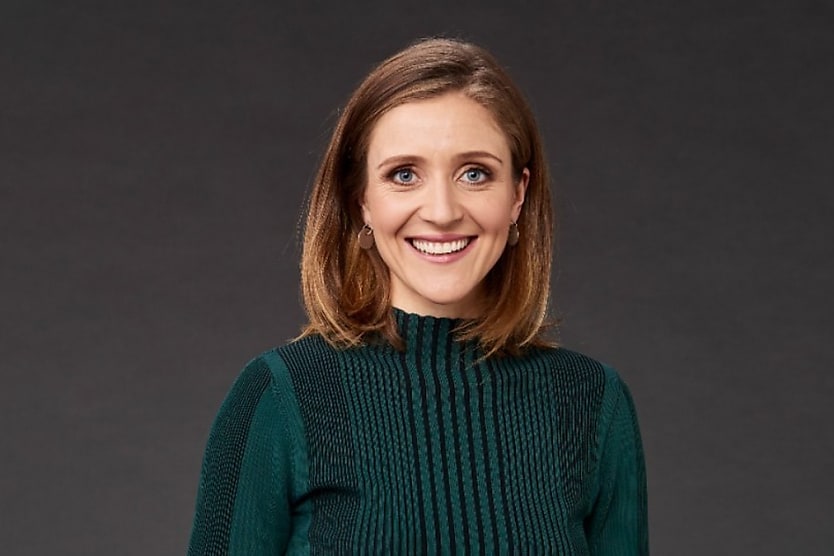
Disability inclusion shouldn’t sit on the sidelines of strategy. It’s a leadership choice, writes Annabelle Williams OAM.
I’ve spent much of my life in high-performance environments. In elite sport, performance is measurable, systems are analysed, and talent is identified and developed with precision. If there is capability in the room, the goal is to unlock it. When I transitioned from Paralympic sport into corporate Australia and governance roles, I noticed something curious. In business, we talk constantly about skills shortages, productivity pressure, and talent gaps. Yet one of Australia’s largest underutilised talent pools remains overlooked: people with disability.
Labour force participation for people with disability sits at around 53 per cent, compared to roughly 82 per cent for Australians without disability, a gap of nearly 30 per cent. Research suggests that increasing employment by just 10 per cent could add around $16 billion to gross domestic product (GDP) annually. That is not a marginal improvement. It represents a significant economic opportunity. And it is not just a social equity issue either – it is a hard economic truth about workforce participation and the productivity we are leaving on the table.
The price of belonging, and the cost of its absence
Workforce participation does not begin with a job advertisement. It begins with belonging, and with the signals people absorb long before they formally enter a workplace.
Early in my corporate career, I walked into boardrooms as a lawyer and director, there to contribute commercially, and was introduced first and foremost through the lens of my disability or my swimming. It was rarely ill-intentioned, but it subtly shifted the dynamic. I was immediately visible because of my disability, yet not always fully recognised for my professional expertise. When difference is framed before capability, it influences how people listen – and over time, it shapes how confidently you show up and how much authority you feel permitted to hold.
These moments matter because representation shapes who believes they belong. Before someone applies for a role or pursues leadership, they are making quieter calculations about whether they see a pathway. Growing up, I did not see bodies like mine in corporate leadership or in mainstream sport. You internalise that absence. When I entered the Paralympic system and saw people with disabilities competing at the highest level, it shifted what I believed was possible. Visibility changed participation. From my own experience, workplaces operate in exactly the same way. When leadership reflects diverse lived experience, it sends a powerful signal that advancement is achievable – not just hypothetical – and that you don’t have to dilute who you are to progress.
The structural barriers
The barriers limiting participation are not always obvious. Often, they are embedded deep in systems and culture.
I’ve found that recruitment processes can unintentionally favour narrow career paths or rigid assumptions about how work must be performed. Advancement often relies heavily on visibility and presenteeism rather than outcomes, and while adjustment processes may exist on paper, in practice, they can feel risky or awkward to navigate.
Many people living with disability or chronic illness still choose not to disclose this to their employer. When disability is framed as exceptional or “inspirational”, it can make disclosure feel like stepping into a spotlight rather than simply accessing the tools needed to perform well. Most people don’t want to be singled out for differences. They just want to contribute, be evaluated fairly, and progress on the strength of their capability.
However, when workplaces normalise flexibility and treat adjustments as standard performance enablers rather than special accommodations, participation increases. This results in inclusion becoming operational rather than symbolic – embedded in everyday systems and part of how work is actually done.
Inclusion as a performance strategy
Organisations facing talent shortages cannot afford to overlook capable, qualified individuals simply because systems were not designed inclusively. In elite sport, broadening the talent pool strengthens performance, and from my experience, the same principle applies in business. When access widens and unnecessary barriers are removed, performance improves.
At Hireup, where I serve on the board, 15.7 per cent of head office employees have shared that they have a disability. As a disability platform, lived experience shapes decisions from the top down through employee disability groups, scholarship, internship and lived experience feedback programs that inform governance, policy and design. That representation is intentional and ensures that strategy is grounded in real insight, not assumption, and that leadership pathways are visible and achievable.
But this principle should not just be confined to disability-focused organisations. Every workplace benefits when decision making reflects the lived realities of both its workforce and the communities it serves. When diverse perspectives are embedded at senior levels, organisations build stronger cultures, make more informed decisions and create environments where more people can contribute fully.
3 practical shifts for leaders
If organisations are serious about unlocking this capability, three shifts are critical. First, embed lived experience in decision making rather than relying solely on consultation. Representation at the board and executive levels signals credibility and belonging. Second, review recruitment and progression pathways to ensure they are genuinely accessible and not unintentionally exclusionary. Third, create environments where disclosure feels safe by normalising disability as part of workforce diversity, equipping managers with confidence and embedding flexibility into everyday practice.
None of these steps requires radical reinvention, but they do require intention and leadership.
Raising the standard
The most powerful moments in my own career were not when disability was centred. They were when it faded into the background, and my performance was evaluated on its merits. For me, that is what belonging feels like, being measured by contribution, not difference.
As Australia navigates ongoing workforce shortages and productivity pressure, the talent we need is not necessarily absent. In many cases, it is already here, but underutilised. The real question for business leaders is whether our systems are designed to recognise that capability – and whether we are willing to unlock it.
Disability inclusion shouldn’t sit on the sidelines of strategy. It’s a leadership choice, and one that carries very real economic consequences for the organisations and communities we’re trying to build.
Annabelle Williams OAM is a Paralympian, lawyer, broadcaster, and board member at Hireup.
RELATED TERMS
The term "workforce" or "labour force" refers to the group of people who are either employed or unemployed.
 Want to see more stories from trusted news sources?
Make HR Leader a preferred news source on Google.
