Lecturer fired then reinstated following ‘reverse-engineered’, ‘victim-centric’ investigation
SHARE THIS ARTICLE
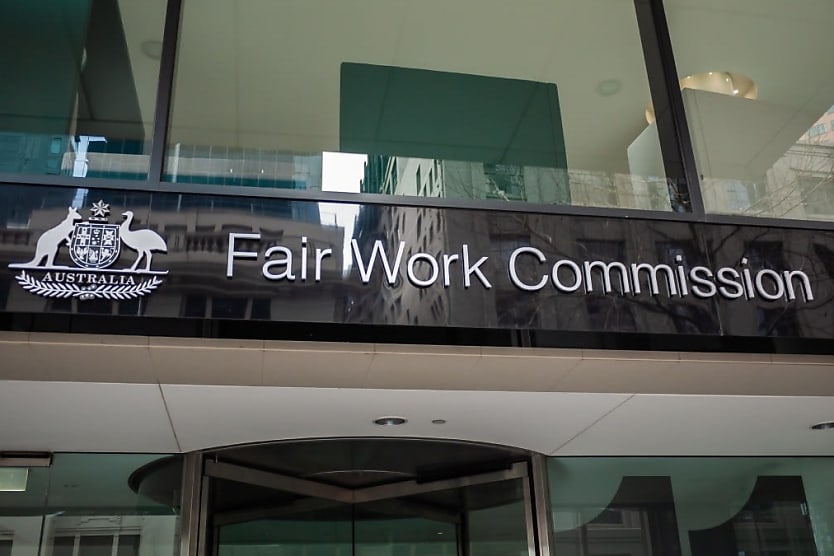
In an unfair dismissal case that went before the Fair Work Commission in late 2025, an associate lecturer who was terminated for misconduct gained reinstatement and compensation.
In a hearing held on 4 and 5 December 2025, Fair Work Commission deputy president Tony Saunders ordered SAE Institute, a tertiary education provider of creative, media and technology studies, to reinstate and compensate its employee, Nigel Haslam, after he was terminated for two alleged incidents of inappropriate misconduct.
Haslam commenced as a full-time associate lecturer from 20 May 2019 until his dismissal on 27 August 2025 at SAE Institute’s Byron Bay campus.
According to Haslam’s employment history, he had approximately six years of service with SAE Institute before his termination. The Byron Bay campus manager, Ben Funnell, gave evidence to the commission saying that Haslam was a “very good employee” and was “very well respected by staff and students”.
‘Grave psychological harm’
The hearing took place on 4 and 5 December. Haslam stood before the commission to give evidence, but the student’s solicitors set aside an order to appear, claiming potential “grave psychological harm” to the student. The commission then relied on the student’s written submissions for the case.
In a complaint submitted by a student to the SAE Institute, the student alleged two incidents of serious misconduct by Haslam, including tucking her hair behind her ear and touching her stocking, telling her, “you look cute”.
The commission later ruled that the matters submitted by the student “do not establish, on the balance of probabilities”, her second allegation of serious misconduct. The deputy president “preferred” Haslam’s evidence that he did not “say to the student ‘you look cute’, nor did he touch, or reach down to touch the student’s stockings”.
Hair tucking confusion
The first and only allegation that the commission accepted occurred on 24 June 2025. On this day, Haslam was running an animation class, which enrolled three students, at SAE Institute’s Byron Bay campus. Two of his students were absent, leaving only one student present for that session.
For the class, Haslam and the student were alone together, with the classroom door closed. Saunders noted a power imbalance between Haslam (an older, male teacher) and the student (a younger female student).
Speaking about the incident during an interview on 1 July 2025, Haslam gave evidence that he was in “close proximity” to the student at the time of the 24 June incident. He recalled sitting across from the student in a wheeled office chair, while she sat on a couch.
When the incident occurred, Haslam gave evidence that he spoke to the student about her assessment with materials for that day’s coursework, projected “on the big screen”.
In the student’s written statement to the commission, she alleged that Haslam reached out and tucked her fringe behind her ear without her consent.
Contrastingly, in his 1 July 2025 interview, Haslam recounted: “While we were talking there was a piece of hair that was in front of her eye. I was looking at that eye while talking to her, so I inadvertently reached forward to flick her hair with my finger (pointing an index finger). I didn’t tuck her hair … The hair came back in front of her face and at that moment, she tucked her hair behind her ear.”
‘No doubt’ of deliberate conduct
Although the commission accepted Haslam’s claim that there was no “sexual element” to this incident, the deputy president found that there was “no doubt” that his conduct was deliberate.
Upon the submission of evidence by the institute’s counsellor, who provided sessions to the student, the commission found that some may consider the conduct intimate in nature – with the counsellor also suggesting that many young women would have been offended by his conduct.
The commission found that Haslam’s conduct was “unreasonable and unwelcome, and could reasonably be expected to make [the student], or any other student, feel offended or intimidated”.
The deputy president received evidence that the student was neurodiverse and that she reported being so upset that she cut off the lock of hair at the spot that Haslam had touched.
The deputy president ruled that Haslam breached his obligation under his contract to comply with the policies and procedures of the institution as a result of a “material breach” of its staff-students relationship policy to ensure “professional and appropriate” interactions.
Although the commission said that Haslam should reasonably have expected that the student would be offended or intimidated by his conduct, it noted that he was not aware of the nature of the student’s disability; only that she had a disability.
Despite this, the commission found that the institution had a “valid reason” to terminate his employment.
Dismissal: Valid but harsh
According to Saunders, the dismissal was “harsh in its consequences for the personal and economic situation of the employee” and “because it is disproportionate to the gravity of the misconduct in respect of which the employer acted”.
In addition, the commission found that the termination would cause a “significant amount of financial and personal strain for each member of his family”, with Haslam submitting that his mental health was adversely impacted by his dismissal.
Haslam submitted that the institution’s investigation into his conduct was biased and partial, contravening his enterprise agreement; alleging that the lead investigator, Mr Evans, “reverse-engineered” the outcome that he was seeking to prioritise the student’s ongoing ability to study at the institution and to recommend the termination of Haslam’s employment. The commission heard that in a statement about the investigation, Evans had said “we are taking a victim-centric approach”.
‘Satisfied’ with reinstatement
The commission found Haslam’s reinstatement to his former position to be an appropriate remedy for the unfair dismissal, and that it was “satisfied” that measures could be put in place to ensure that the student would feel safe on campus, and that Haslam could continue teaching on campus.
In addition to the commission’s order for reinstatement, the commission ordered that the institution also compensate Haslam for lost remuneration in the period from 27 October 2025 until the date of his reinstatement.
In its reasoning, the commission stated that remuneration would not be provided for the period between 27 August and 26 October (partially covered by his five weeks of payment in lieu of termination notice) as a contrition penalty to reinforce the inappropriate nature of Haslam’s conduct.
The case citation: Nigel Haslam v SAE Institute Pty Limited (U2025/12678).
RELATED TERMS
Compensation is a term used to describe a monetary payment made to a person in return for their services. Employees get pay in their places of employment. It includes income or earnings, commision, as well as any bonuses or benefits that are connected to the particular employee's employment.
When a company terminates an employee's job for improper or illegitimate reasons, it is known as an unfair dismissal.
 Want to see more stories from trusted news sources?
Make HR Leader a preferred news source on Google.