

By:

“We are in this window where you can really lock in the trajectory of the change for yourself and your organisation. You’re not too late if you don’t feel like you’ve got the intent and agency, but you’re getting there,” Raman told host and HR Leader Managing editor Jerome Doraisamy.
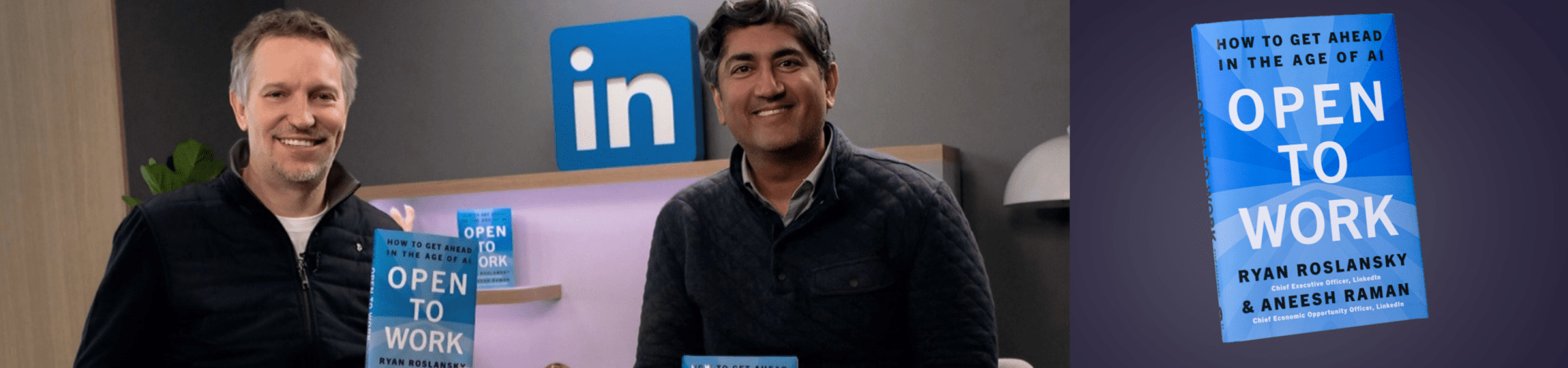
In the book Open to Work: How to Get Ahead in the Age of AI, LinkedIn shared a “three-bucket approach” that invited readers to group tasks. The first bucket is for tasks that can be passed over to AI, and the second includes tasks that rely on higher-value tools but still require a human touch.
The third are tasks that have been opened up to the employee due to time saved from bucket one and expertise from bucket two.
“What are you doing with other humans that’s new? What are the partnerships you’re doing? Like a conveyor belt, the tasks in the average job are going to shift – that’s how you really want to think about that 70 per cent statistic,” Raman said.
Raman said HR professionals will have an advantage, particularly as AI unlocks human capability “at a whole new level”.
In the face of a “complete and total behaviour shift”, Raman shared that HR professionals should consider how to support new ways of working and how to encourage high performers to take risks and push themselves outside their comfort zones.
Raman said HR professionals should also “learn quickly about a whole [lot] of things” they may not have needed to know beforehand, such as how the mind is at the centre of work. He said to do so by speaking to neuroscientists and behavioural psychologists.
All jobs are going to change, but no job category is going to disappear. Job titles might change, the tasks might merge into new ways, but entry-level work’s not going anywhere.
- Raman says.
“All companies, and especially every HR team, should be getting smart on the human brain: what we know about it, what we know about neuroplasticity, what we know about change management at a whole new level. Then I think it’s really making sure you have a seat at the table to determine where the business transformation conversations are going,” Raman said.
Speaking of transformation conversations, Raman said there are three shifts leaders should be following first. The first is to start by leading with design, not by command; rather than a top-down approach, create architecture for innovation at all levels.
For the second, Raman encouraged HR professionals to see people by their capabilities rather than categories: “No one is a mid-level marketer or a senior engineer. All your folks have a bunch of skills, and you’re going to want to move them around over time.”
As for the third, Raman said that “managing is coaching”.
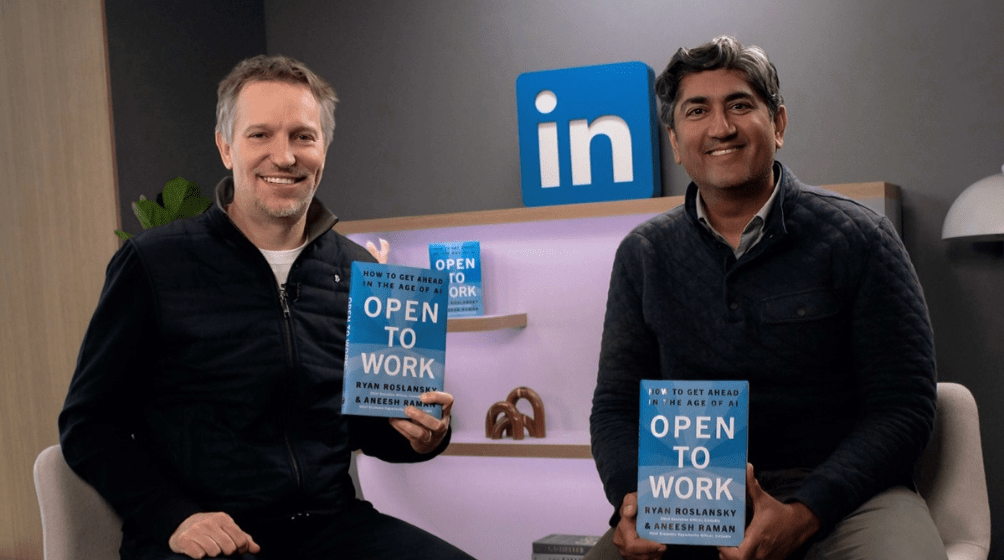
Aneesh Raman with his co-author, Ryan Roslansky, the former CEO of LinkedIn and a senior leader at Microsoft
“It’s akin to what sport coaches do: they’re managing the human on their team, the energy they’re bringing, the way that they’re trying to get everyone to work together,” Raman said.
The HR leaders of today have a “blank slate that is the envy of other generations of HR professionals” because what the next few years have provided is a way to reset the dial, Raman added.
“This is your opportunity to completely remake work at your organisation in ways that are more pro-human and pro-mobility and pro-everything you believe in more than any other era of work. So go do that,” Raman said.
Make AI about small steps that eventually, over time, lead to giant leaps. And that’s true for you as HR leaders as well.
- Raman says.
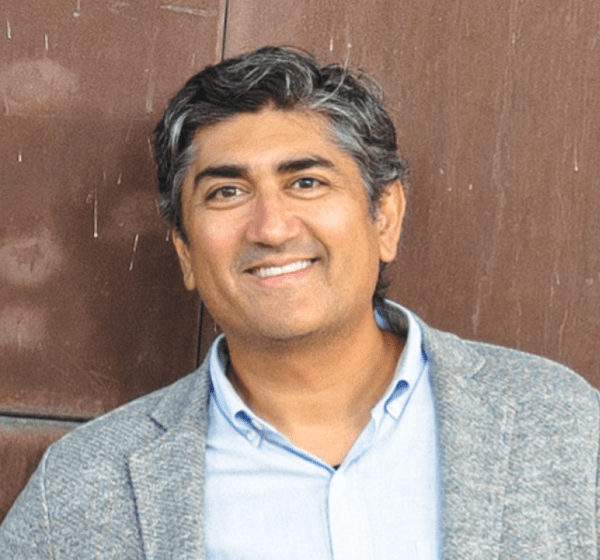
Aneesh Raman
Chief Economic Opportunity Officer, LinkedIn
LinkedIn connects the world’s professionals to make them more productive and successful and transforms how companies hire, learn, market, and sell. Our vision is to create economic opportunity for every member of the global workforce through the ongoing development of the world’s first Economic Graph. LinkedIn has over 1.3 billion members and has offices around the globe. www.linkedin.com / mobile.linkedin.com